• Skip to primary navigation
  • Skip to main content
Menu
  • Services
  • Model of Therapy
  • Job Opportunities
    • Paediatric OT
    • Mental Health OT
    • New Graduates
    • OT Student Placements
    • Allied Health Assistants
    • Client Support Roles
    • Job Opportunities Enquiry Form
EXPLORE & SOAR new Logo FC RGB 600px
Menu
  • News
    • Blog
    • Newsletters
  • About
  • Contact
    • Parent FAQs
    • NDIS FAQs
    • Career FAQs
    • General Enquiry Form
    • New Client Waitlist Enquiry

Therapy

Life Transitions and The New Year

exploreandsoar · 22 January 2024 · Leave a Comment

LIFE TRANSITIONS AND THE NEW YEAR

Happy New Year! We hope you have enjoyed the end-of-year celebrations with some yummy food, rest and spending time doing things that bring you joy. 

Annual Theme – Life Transitions

Progressing from a year of developing Safety for Vulnerability for ourselves, our team, clients, and their families and communities has shaped us into this next phase of ‘Life Transitions’. For myself, our team, and many of our families, they are all going through new life transitions. Life transitions are powerful and have the potential to shape who you were, who you are and who you are becoming.

What are life transitions?

Life Transitions can also be described as ‘Transitional stages of life’.

It is defined by significant changes in roles, responsibilities, and routines requiring you to adapt to new circumstances. It can also involve a constant flow from one temporary state to another, resulting in each of these changes being a transition or a “passage from one state, stage, subject, or place to another” (Transition, 2018).

Transitions in everyday life can be meaningful or a part of everyday life. Different types of transitions, for example;

Smaller everyday life transitions:

  • Engaging in an everyday conversation – transitioning in and out of a conversation with someone.
  • Commuting to school or work – leaving home, travelling, then entering the office or school grounds.
  • Transitioning from different classrooms or from the classroom to recess and back again.

Significant Life Stage Transition:

  • Transition to preschool, Kindergarten, Year 7 and transitioning out of school.
  • Experiencing puberty. 
  • Beginning a relationship. 
  • Moving home: moving from one home to another.
  • Moving Communities: moving from one town to another.
  • Changing sporting clubs or sports.
  • Changing careers, jobs or being promoted with different responsibilities.
  • Entering the workforce.
  • Commencement of University and a significant life transition for us adults is
  • Parenthood. 

Do you have any new life transitions happening this year? Or What life transition are you experiencing or in at the moment?

This year, we have a few of our clients coming to the end of their schooling years, some making the big transition into Year 7 and others who are transitioning into Kindergarten. 

Personally, this year, I am making the new life transition into parenthood alongside my husband. A new life transition for us that you all are already on, and I am thrilled to be joining you. 

For the team, many of us are going through our own life transitions as well and have shaped many of our conversations together by sharing our experiences and different strategies that have helped us along the way.

Explore and Soar’s Life Transition

As Explore and Soar approach our sixth year with you all, we are thrilled to be growing alongside our clients and families! We are excited to be sharing with you an extension of our services and an ability to continue to support you as you continue to grow. 

For Explore and Soar, we, too, are in a new life transition; we have decided to share with you an extension of our service to continue to support our clients as they make the new step and life transition into adulthood. That transition from school to work. That transition to independence, living alone, being self-sufficient and living a meaningful and best life! We are so excited to continue to work with our clients now to the age of 24! This is an exciting opportunity for us to continue to build our occupational therapy team with therapists who are experienced in supporting our teenagers and young adults in these big life transitions!

To mark these life transitions for all of us, you will see our new Explore and Soar logos, socials and website updates, and a uniform change this coming month. We are loving these changes and are excited to share them with you. So keep an eye out, as they are coming soon!!

How Explore and Soar can help you?

Please know you are not alone; each person at different ages and stages in their lives go through different transitions based on their personal life experiences. Each of our clinicians is trained in providing strategies, interventions and support through any life transition, meaningful activity or everyday task. We love to problem solve and help no matter the question or concern. 

Each month this year, you will also have access to a different blog that will go through different life transitions, big or small and have a range of different strategies or ways to support you through those moments. 

We are always here to help in a range of different ways. If you’d like to chat more, please don’t hesitate to contact us today! 

0477 708 217 or admin@exploreandsoar.com.au

Articles:

Adler, A. B & Castro, C. A. (2019). Transitions: a Theoretical Model for Occupational Health & Wellbeing. Occupational Health Science. 3:105-123.

Until next time, 
Jess

PUBLISHED JANUARY 2024

Latest Posts

  • It’s Not Just Emotions: Understanding Your Child’s Nervous System
  • Parent Coaching The Power in Collaborating, Empowering & Educating
  • Reclaiming Potential with Clarity
  • A Year of Community for Wellbeing and End of Year Celebrations
  • School Readiness Transitioning to Kindergarten

Merry Christmas from Our Family to Yours

exploreandsoar · 22 January 2024 · Leave a Comment

MERRY CHRISTMAS FROM OUR FAMILY TO YOURS

It’s December! Bring on all the end-of-year celebrations after another great year. How are you celebrating and acknowledging the last 12 months? 

End of Year Celebrations

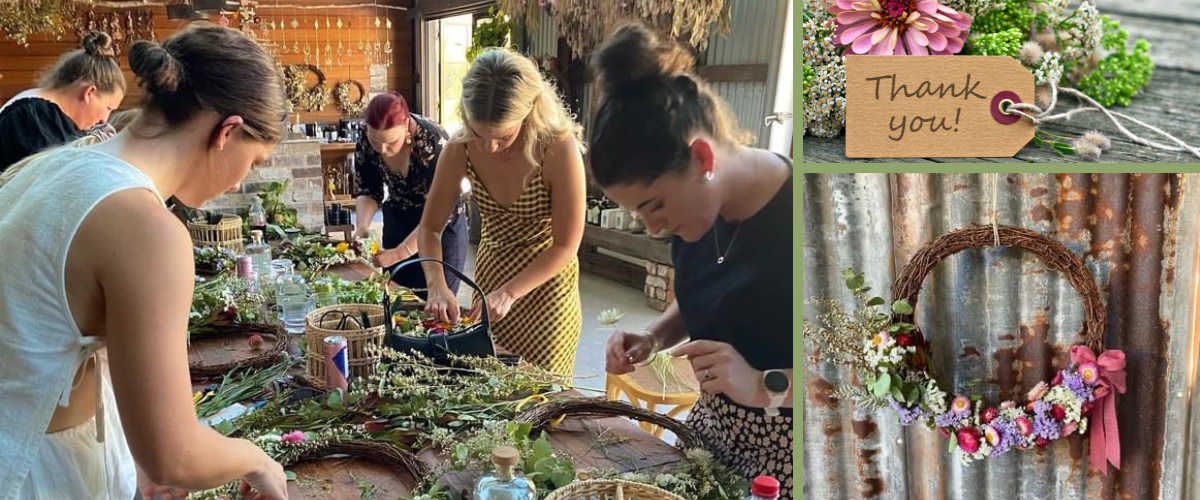
For us, our team have been all together again in November and have had our Christmas Party. We celebrated the last year by being creative with making Christmas wreaths, eating delicious foods and spending some quality time together. Check out some of our Christmas celebratory pictures. Lots of laughs were had! 

We have continued our time together to participate in a team day, where we have spent time together reflecting on just how much we have achieved together for ourselves, clients, their families and our communities. We have been beyond grateful to continue sharing our knowledge and providing ongoing support, therapy and guidance in achieving your goals this year.  So, thank you for being vulnerable and safe in allowing us to come into your home and work so closely to gain these achievements! Without your ongoing commitment, we wouldn’t be able to work so effortlessly alongside you!! 

This opportunity has also allowed us to identify where we will focus on for 2024. As you know, we love a good theme, and this coming year, we have another coming your way. Keep an eye out for our New Year January blog, where we will share the 2024 Annual Theme and all the new exciting things coming!

School Holiday Groups & Intensives!

The last 12 months, we have been focused on developing new group programs for our clients based on feedback we have received. We have been working behind the scenes to be able to offer these options for January 2024. It gave us such joy to announce and share them with you all. If you have missed out on seeing these groups, make sure you check out our website for all the information or contact us today! 

These new group programs, “Game Changers” and “Transition to High School”, will commence in the January 2024 school holidays alongside our popular group programs “Big School STARS (transition to Kindergarten)”, “Shake n Bake” and “Teenage Dirtbags”.

Based on our group numbers, we will also offer limited spots for our School Holiday Intensives Programs. If you would like the opportunity to commence the year strong, discuss it with your treating clinician or call our office today. 

Merry Christmas & Happy New Year! 

With great love and well wishes, the Explore and Soar team wishes you a great end of year with lots of celebrations, rest and family time. We look forward to going on a well-deserved break with you all from Friday, 15th December 2023 and returning on Monday, 8th January 2024. 

We can’t wait to see you all in 2024.

Until next time, 
Jess

Latest Posts

  • It’s Not Just Emotions: Understanding Your Child’s Nervous System
  • Parent Coaching The Power in Collaborating, Empowering & Educating
  • Reclaiming Potential with Clarity
  • A Year of Community for Wellbeing and End of Year Celebrations
  • School Readiness Transitioning to Kindergarten

How to Build Resilience for your Child and Family

exploreandsoar · 17 January 2024 · Leave a Comment

HOW TO BUILD RESILIENCE FOR YOUR CHILD AND FAMILY

By the time you have read this blog, we will be back into the daily routines of school for Term 2. I don’t know about you, but Term 1 seemed to fly past, yet at the same time went so slow! Time seems to go faster as we get older, gain more responsibilities and life/society, in general, becomes busier. Some days there just does not seem to be enough hours to get everything done! And with that, I know that my own ability to cope and my own regulation capacity varies as I try to juggle all that is on the to-do list – both at work and at home. 

Over the last few months, I have been engaging in different professional development courses as I am forever learning and striving to do better at my job. While looking at various courses, a theme that seems to be more so present now than ever before is that of positive mental health, mental wellbeing and resilience. A theme that is across all aspects of society, with more awareness and education occurring on multiple levels. Resilience, in particular after the pandemic, seems to be coming more to the forefront. We often read NDIS goals or have parents tell us that they want to develop their child’s resilience. 

So what is Resilience?

Resilience is defined as:

  1. the power or ability of a material to return to its original form, position, etc., after being bent, compressed or stretched; 
  2. the ability of a person to adjust to or recover readily from illness, adversity, major life changes etc; 
  3. the ability of a system or organisation to respond to or recover readily from a crisis, disruptive process etc

(From https://www.dictionary.com/browse/resilience (14th April 2023)

We can definitely see from those definitions why it is such an essential concept at the moment. From an OT perspective, we look at occupational resilience – a person’s ability to successfully participate in their everyday activities while navigating the challenges, changes, stressors and difficulties they face. We develop this resilience when working with your child so that they may overcome whatever hurdle they face at that point in time. 

Resilience development occurs through external factors (our environment), internal factors (our values, motivations and beliefs) and learnt factors (social, emotional and interpersonal skills). As OTs, we look at the whole person to consider all of these factors. We look at developing and enhancing your child’s knowledge and skills of emotions and emotional regulation, as their social skills and higher cognitive skills such as problem solving and negotiation. This is only one factor in the overall bigger picture. 

Family resilience and how to develop it

Developing Family Resilience is also vital. A key protective factor in mental wellbeing is relationships. We can foster family resilience through occupations (activities) that focus on each person’s strength, allow open and honest emotions and regulation capacities, being present and engaging with each other while contemplating the bigger picture, such as how we can all give back to our wider communities. 

In my family unit, one way that we worked on our family resilience was over Easter, we spent time at home enjoying our own space while also resting our minds and bodies. Initially, the kids were not so keen on staying home, but it allowed us as a family to bake, have Mario Kart races, and do a puzzle where everyone contributed to the finished product. Not all of us are good at each of those activities, nor is it our favourite thing to do. There was plenty of frustration, annoyance, and disappointment voiced not only by the children but us as parents too. It allowed us all time to decompress and process the term that was so that we could reconnect, reset and refresh for what is to come. Each family is different, so there is no right fit or right way to do this. It is about finding what works for you and yours.

Resilience Activities & Ideas for you, for your child and for your family

  • Gratitude Walks – go on a walk around your neighbourhood, through a park and comment on what you can see and are grateful for.
  • Art therapy – spend some time drawing and colouring in with your child to foster connection and communication.
  • Community Service – give back to your community in whatever way you can. 
  • Ask yourself or your child what the hard part is – identify what the challenge is to them so that you can work together to overcome it.
  • Look at the Resilience Donut – I have, I can, I am – to identify your strengths. 
  • Compliments circle – take turns in giving compliments within your family; give a random compliment to a stranger and see their reaction.
  • Sharing stories of Resilient People in history whom your family can relate to, eg: JK Rowling, Nelson Mandela.
  • Create a dream board – using visualisation of what you believe your family values and goals are. You could do this individually and then come together to work on it. 
  • The Hard Thing Rules by Angela Duckworth – This combines passion & perseverance, building confidence and grit. There are 3 parts.
    • 1. Everyone must do something hard, something that requires practice, something where you are going to get feedback so you can get better at something; 
    • 2. Must finish what you start eg: season of sport, number of lessons signed up for; 
    • 3. No one gets to pick the hard thing for anyone else – you must choose your own challenge. 

Additional Resources to read 

Check out some of the resources below around resilience for various age groups. Please also chat with your therapist about how else we can support you and your child here at Explore and Soar.

  • Smiling Minds – https://www.smilingmind.com.au/resilient-families-program
  • Every Mind – https://everymind.org.au/resources/child-illness-and-resilience-program-chirp
  • Raising Children Network – https://raisingchildren.net.au/school-age/behaviour/understanding-behaviour/resilience-how-to-build-it-in-children-3-8-years
  • Beyond Blue – https://healthyfamilies.beyondblue.org.au/healthy-homes/building-resilience
  • The Resilience Project – https://theresilienceproject.com.au/at-home/home-2023/
  • Positive Psychology worksheets – https://positivepsychology.com/resilience-activities-worksheets/ 

Articles 

Brown. T (2021). The response to COVID-19: Occupational resilience and the resilience of daily occupations in action. Aust Occup Therapy Journal, 68, pg. 103-105

Masten AS, Barnes AJ (2018). Resilience in Children: Developmental Perspectives. Children 5(98) https://www.ncbi.nlm.nih.gov/pmc/articles/PMC6069421/


Zafran, H (2020). Occupational gifts in the time of a pandemic. Occupational Therapy Now, 22(4),
pg. 5-6. https://caot.ca/uploaded/web/otnow/OT%20Now_JULY_20.pdf#page=7

Until Next time,
Lori

ORIGINALLY PUBLISHED MAY 3, 2023

Latest Posts

  • It’s Not Just Emotions: Understanding Your Child’s Nervous System
  • Parent Coaching The Power in Collaborating, Empowering & Educating
  • Reclaiming Potential with Clarity
  • A Year of Community for Wellbeing and End of Year Celebrations
  • School Readiness Transitioning to Kindergarten

Handwriting & Creative Writing for Self-awareness and Wellbeing

exploreandsoar · 17 January 2024 · Leave a Comment

HANDWRITING AND CREATIVE WRITING FOR SELF-AWARENESS AND WELLBEING

There is nothing quite like putting pen to paper. 

Handwriting is a skill that we are often introduced to prior to entering school. It is then further explored in early education, then over time we develop the ability to form more comprehensive cursive written text. As we enter our teenage years and tertiary education, we then progress to touch typing – with digital correspondence becoming our most prominent means of written communication. 

We are taught to identify and draw shapes that lead into the pre-development of writing letters, and understand shape recognition of our letters to then write them. As Occupational Therapists it is our job to facilitate fine motor development, hand control and the strength needed to be able to achieve these handwriting skills, develop pre-requisites to handwriting and the correct letter formation. This occurs from capital letters to lower case to cursive writing in grades 3 and 4. We do this in conjunction with a child’s development and alongside the teachers in your child’s classroom. 

The power of handwriting is something that we as OT’s stress the importance of. Hoping for it not to be lost in a technologically advancing world. The ability to draw shapes and practice drawing letters prior to school, is a more powerful form of letter recognition for development in reading and writing once transitioning into school (James & Engelhardt, 2012).This is a more profound use of skill acquisition and the attention to complex writing skills, compared to tracing over letters on paper or using apps to do on electronics (Berninger & Amtmann, 2003).

So, what else is handwriting powerful for? 

Its power lies in a child or adult’s ability to to express themselves in written text! It can also be used as we get older as a creative outlet, a way to express ourselves without judgement, a way to work through our own personal experiences and emotions attached or further explore the process of different texts like short stories, plays and poetry. The power of putting pen to paper for written text has such profound positive effects on mood and well-being (Deveney & Lawson, 2022), yet despite all this evidence and documentation on creative handwriting on paper, it appears we are moving towards more technology based learning? So how does this further impact our children’s ability to attend to activities for longer, enhance their higher executive functioning skills of organisation, sequencing of an activity and expand their ongoing development and coordination of all skills together, such as cognitive, motor and neuromuscular?

I pose the question, what if writing is a creative outlet? A way to express ourselves without judgement, without rules, a way to make sense of our inner and outer world and enhance our wellbeing through body, mind and spirit. To declutter the mind and find truth, reasoning and intent behind our feelings and emotions. What if the very idea of escaping into an idea or fantasy prompts emotional regulation, self expression and a great understanding of oneself? 

I say this as someone who has truly found the benefit of written text – predominately through journaling to make sense of the world around me. Growing up, written text, English and the pressure of being creative within a certain formula was extremely difficult for me. I would become anxious and overwhelmed by the expected requirements. Not to mention spelling, grammar and paragraph formation. It was like an automatic cognitive roadblock to my brain that impacted the way I would bring together my creative mind and my higher executive functioning skills. 

Upon reflection growing up, these were all a part of my challenges academically and skills that certainly didn’t come to me overnight. In focusing on the finer details, I couldn’t be truly creative and use writing as a means to express myself and my emotions. I lacked self-regulation strategies, emotional awareness and that secure free outlet that I find today, in writing by hand in my diary. 

Taking the pressure off my grammar, spelling and structure when writing has helped to truly clear the road blocks I experience when I have to write an important written text for business or for everyday life. Even more so, journaling and creative writing about my life helps to clear my mind, and allows me to prioritise my important tasks. Looking back, what I often wonder that if I had this opportunity to explore a sense of creativity without limitations as a child, how much more expressive and perhaps how significantly better off my cognitive and creative mind would have been then. Especially through my teenage years and the challenges that high school brings. 

By using myself as an example, I hope that you can see just how important handwriting truly is as a means of self expression. Add to this colours, drawing, mind maps.. And your child’s development is greatly and positively impacted not just today but their years to come. Creative writing helps us gain perspective and channel different emotions.

So how do you use written language in your life and does it support your well being and mood when engaging? How do your children utilise written text in their life, and are you allowing space for creative and written language to express their emotions and work out different daily social contexts and events in order to  help with their own personal development and awareness? 

It might be time to put pen to paper and step away from the screen – for some creative expression. 

References:

Berninger, V. W., & Amtmann, D. (2003). Preventing written expression disabilities through early and continuing assessment and intervention for handwriting and/or spelling problems: Research into practice. In H. L. Swanson, K. R. Harris, & S. Graham (Eds.), Handbook of learning disabilities (pp. 345–363). The Guilford Press.

Deveney, C & Lawson, P. 2022, Writing your way to well-being: An IPA analysis of the therapeutic effects of creative writing on mental health and the processing of emotional difficulties. Counselling & Psychotherapy Research, Vol 22, Issue 2.   

James, K. H. & Engelhardt, L. 2012. The effects of handwriting experience on functional brain development in pre-literature children. Trends in Neuroscience and Education. Vol 1 Issue 1. 

Until next time,
Jess

ORIGINALLY PUBLISHED JULY 5, 2022

Latest Posts

  • It’s Not Just Emotions: Understanding Your Child’s Nervous System
  • Parent Coaching The Power in Collaborating, Empowering & Educating
  • Reclaiming Potential with Clarity
  • A Year of Community for Wellbeing and End of Year Celebrations
  • School Readiness Transitioning to Kindergarten

Social Skill Development & Community

exploreandsoar · 17 January 2024 · Leave a Comment

SOCIAL SKILL DEVELOPMENT & COMMUNITY

Last month we spoke about enhancing our understanding and development of safety and connection between the caregiver and a child. In the time that’s passed since our last blog,  so much has happened at Explore and Soar and with our families! With school and extracurricular activities, celebrations, catch ups and holidays all occurring over the last 6 weeks, as well as the constant uncertainty of Covid, we have been forging a path towards a new normal.

I have often thought about how exhausting assimilating into a ‘normal’ social life is for me, my team and our families. We have gone from months of being stuck in our own homes, to all of a sudden being out and about all the time. It has been exciting to reconnect with our friends, family and community in ways we did pre-pandemic, yet such a change does come with a few consequences. 

Notably, our children are exhausted! 

They simply haven’t had this much social stimulation in a long time. They have been out on weekends and are now experiencing their first proper end of term fatigue. And let’s be honest, as parents, we too are exhausted and needing some down time. 

As much as I want to discuss social skills and interaction in this month’s blog, I’d like to focus on finding the balance between socialising and creating the time for rest and integration (processing) time. 

Socially, developing these skills occur at the commencement of regulation and engagement (please refer to our previous posts), but social skills are dependent on a child’s ability to process sensory information internally and externally (from the world around them). This is completed through sound (middle ear), movement (vestibular system found within the ear), and the visual system (eyes), in conjunction with other systems in the body. Additionally these organs and sensory systems are all connected through cranial (head) nerves. When we are processing information, our sensory systems alert and motivate our body to carry this information through our nerves. Our cranial nerves are located on the face and in the brain, which allows us as young children to begin understanding non-verbal social cues. There are a lot of nerves that are connected to the mouth and eyes, from our ears, which when working together, create facial expressions and we then in turn use words to express ourselves, allowing us to socially interact with others using both non-verbal and verbal communications. 

If our children have challenges processing sound, visually tracking or moving their body, just their emotional regulation and social skill development can be impacted. Unfortunately children can’t always tell us what is going on inside their body with the use of words, but they can tell us with their behaviour. 

So let’s take 5 minutes to reflect on how your children have been over the last month. Ask yourself these questions:

How do they look? How are they feeling? Are they regulating through their emotions? Are they coping at school? How fatigued are they? When you are communicating and connecting with your children, are they seeing your facial expressions? Are they able to read your social cues in order to pick up on what comes next? 

If the answer to any of these questions is no, then please take some time to work on safety and connection with them. Support their regulation, calm their bodies and nervous systems. Pausing and giving time for their bodies to rest is optimal integration time to support gains in all development but also supports them in understanding demands socially through their sensory systems. 

So many of our children are easily overwhelmed by sounds, visual input, touch and movement. When they are not able to process these inputs optimally, it can greatly impact how they socially connect with you, as parents, their siblings, and additionally how they cope in the school and community environments, when connecting with their friends.

Which brings me to socialisation in schools. Is your child having difficulties socialising with their friends at school, is it becoming more of a problem now than in previous years? And how can you help your children more?

Please reach out and chat to us if you are worried about this! Each of your clinicians will have an understanding of your child’s needs and when we are working with them, we are developing their foundational skills to further support their social skills, or additionally we are specifically working on skills that can further expand their capacity to interact with peers.

Some strategies we work towards developing are:

  • Understanding their feelings.
  • Understanding others feelings through body language and facial expressions, such as happy face, surprised face, frustration or sadness.
  • Understanding whole body listening concepts and active listening when interacting with friends or a group of friends.
  • Developing group plans, negotiating and turn taking within these activities.
  • Expected, unexpected and flexible thinking when working with friends. 

At home there are things you can do to further expand your children’s social skills, such as:

  • Understanding which emotions your children feel or express to you. How many are there? (remember this will differ pending age and their self-regulation skills). 
  • Can they ask you what is wrong if your mood or facial expressions change?
  • Playing silly faces, can they guess emotions from facial expressions, such as sad, excited, surprised?
  • Play a game together that you all contribute to, each having an idea and adding everyone’s ideas together, to form a group plan and play as a family. 
  • Play boardgames that are chance related to expand on regulating through waiting their turn, winning and losing, as well as supporting each other as a whole family. 

As we are socially interacting with others in the community, school and different events, in order to further support your child’s tolerance in busy environments or supporting their reintegration into the community, you need to take notice of fatigue. Please consider different strategies that can support you and your children re-entering into the social world such as:

  • Reducing sounds, visual input and high energy movement to help them process the world around them.
  • Provide some visuals and plan for the day to support their understanding of routine and expectations.
  • When the days are not as busy, take your time or allow for transition times between activities.
  • Provide moments of deep pressure hugs, fetal positioning, ice chips, inversion activities, respiration or squishes to support their regulation and calming of the sensory system for increased engagement and interaction with peers.
  • Reduce time spent in the community or at events to support a transition back into the community and increase tolerance of high sensory inputs over an extended period of time.  

Allowing and providing our children with the best support in order to allow their sensory systems to engage socially and be present with others is paramount. It is vital in the current environment due to the reduction in time spent socialising during the last 24 months. Be kind to yourselves and to your kids, you have permission to take it slow. You do not need to say yes to everything! Think about what is best for you and your family, and focus on that!

We hope to continue seeing all of you venturing out into the communities, reconnecting with friends and expanding upon our children’s social skills. If you think we can further help you with these skills and expand on our support offerings, please don’t hesitate to contact me or your treating clinician.

Until next time,
Jess

ORIGINALLY PUBLISHED APRIL 13, 2022

Latest Posts

  • It’s Not Just Emotions: Understanding Your Child’s Nervous System
  • Parent Coaching The Power in Collaborating, Empowering & Educating
  • Reclaiming Potential with Clarity
  • A Year of Community for Wellbeing and End of Year Celebrations
  • School Readiness Transitioning to Kindergarten
  • « Go to Previous Page
  • Page 1
  • Interim pages omitted …
  • Page 4
  • Page 5
  • Page 6
  • Page 7
  • Go to Next Page »

Subscribe to our newsletter

Receive our news and updates via email. That's all.

View our Terms of Use.

Your feedback is always valued at Explore & Soar. If you have some feedback to help us support your needs better, please click here and share your valued feedback with us today.

STAY CONNECTED

  • mobile
  • mail
  • facebook
  • instagram

Explore and Soar

Explore and Soar © 2026 · Site by Design et Cetera

Explore and SoarLogo Header Menu
  • Home
  • Services
  • Model of Therapy
  • Job Opportunities
    • Paediatric OT
    • Mental Health OT
    • New Graduates
    • OT Student Placements
    • Allied Health Assistants
    • Client Support Roles
    • Job Opportunities Enquiry Form
  • News
    • Blog
    • Newsletters
  • About
  • Contact
    • General Enquiry Form
    • New Client Waitlist Enquiry
    • Parent FAQs
    • NDIS FAQs
    • Career FAQs