• Skip to primary navigation
  • Skip to main content
Menu
  • Services
  • Model of Therapy
  • Job Opportunities
    • Paediatric OT
    • Mental Health OT
    • New Graduates
    • OT Student Placements
    • Allied Health Assistants
    • Client Support Roles
    • Job Opportunities Enquiry Form
EXPLORE & SOAR new Logo FC RGB 600px
Menu
  • News
    • Blog
    • Newsletters
  • About
  • Contact
    • Parent FAQs
    • NDIS FAQs
    • Career FAQs
    • General Enquiry Form
    • New Client Waitlist Enquiry

Development

Team Culture

exploreandsoar · 16 January 2024 · Leave a Comment

TEAM CULTURE

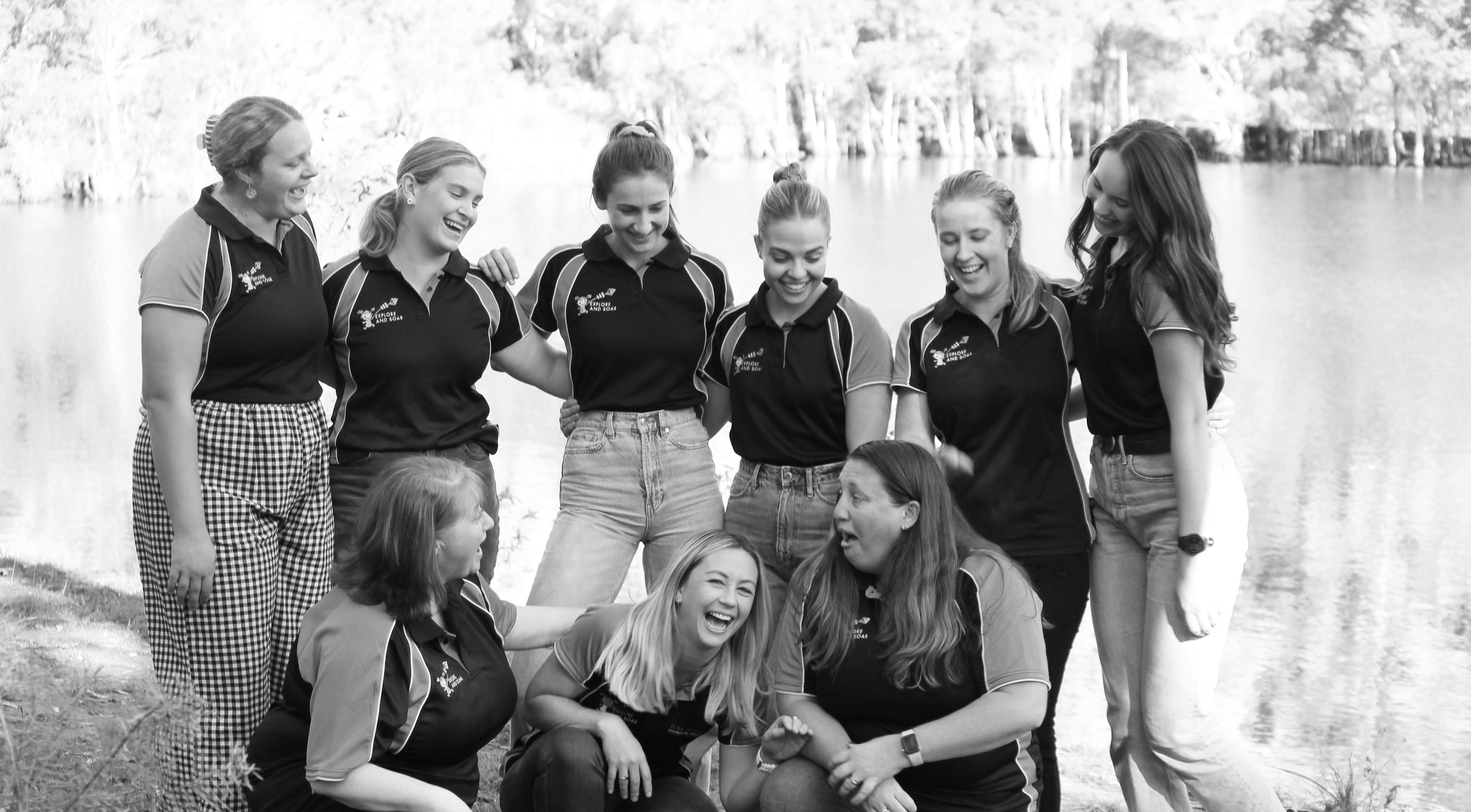
Over the last few months we have had the privilege of sharing the way in which we as a team can provide support to our clients and families; through a multidisciplinary team approach, therapeutic assistant support and the way in which OT’s share their skills through our own unique lense. 

To be a part of a great team and work alongside some amazing health professionals is a privilege. 

Our desire to offer support, bring joy and give back to our communities through effective collaboration, is the driving force of everything we do.

The Explore and Soar team love working together in our regular meetings. I always encourage creativity and the freedom to express ideas, recommendations and thoughts with one another. Often our greatest ideas stem from our team catch ups. We spend the time bouncing off one another’s energy, brainstorming and providing support or encouragement when needed. As we are a mobile business, it’s vital for us to put aside the time regularly to maintain a positive and productive team culture.

Team culture at Explore and Soar revolves around building strength and unity together, where open communication and connection is paramount. Ensuring that these things remain a core focus, allows us to collectively feel empowered whilst working independently but also allows us to work efficiently and cohesively as a team. Without this integral core value, our quality of service, knowledge and connection with our clients and families would not be present. It is what sets us apart; our connection and relationships. 

Maintaining connection within our team is also encouraged through staff development and training days. These are vital for the continued development of knowledge, skills and support. We also share time together through staff retreats and team days where we can reconnect with each other in order to sustain our culture as a team. This has been paramount over the last few months as we have now doubled our team! To ensure our quality of service remains the same, we must maintain a cohesive work flow and communication. It’s important that we bring our best individual qualities together, placing value on our individual strengths, further allowing us to expand our knowledge as a team. 

Our connectedness as a team allows us to offer adaptive, creative and flexible support options to our clients. In addition, our ability to build relationships and connections with your whole family, whilst collaborating with other services, means that we are able to attain the best results for your unique and desired goals.

As we are a mobile business, our way of connecting can sometimes be different within our own team. That’s why it’s so important for us to maintain our regular coffee debriefs, training days and phone calls in amongst our busy schedules. We offer each other support and advice throughout our weeks and sessions with clients – ensuring that the whole team is there to support our communities and one another.

As we finish one year and get ready to step forward into another, we are truly excited to be expanding our team further in order to support our families. We plan to end the year on a positive note, with excitement for the future and by continuing to offer the highest level of support to our clients. 

Keep an eye out on our socials for some new team members in the coming weeks! We look forward to introducing some new faces to you all!

Until next time,
Jess

ORIGINALLY PUBLISHED NOVEMBER 4, 2020

Latest Posts

  • Reclaiming Potential with Clarity
  • A Year of Community for Wellbeing and End of Year Celebrations
  • School Readiness Transitioning to Kindergarten
  • Occupational Therapy in Action for Wellbeing
  • Balanced Bodies for Connected Communities

Multidisciplinary Approach

exploreandsoar · 16 January 2024 · Leave a Comment

MULTIDISCIPLINARY APPROACH

Building a multidisciplinary team involves a range of professionals from different disciplines, working in harmony to provide care. 

At Explore and Soar, a multidisciplinary approach is about building a strong team around our families, in order to provide high quality, best evidence intervention, coaching and strategies to reach the desired outcomes of each individual and family. 

This process can be somewhat overwhelming but incredibly powerful and rewarding.  

So let’s start by talking about the definition of multidisciplinary care, in order to give you a little more detail on what’s involved.

The following definition outlines the objectives as well as some of the challenges involved in the provision of multidisciplinary team care:

Multidisciplinary care – when professionals from a range of disciplines work together to deliver comprehensive care that addresses as many of the patient’s needs as possible. This can be delivered by a range of professionals functioning as a team under one organisational umbrella or by professionals from a range of organisations, including private practice, brought together as a unique team. As a patient’s condition changes over time, the composition of the team may change to reflect the changing clinical and psychosocial needs of the patient.

Mitchell G.K., Tieman, J.J., and Shelby-James T.M. (2008), Multidisciplinary care planning and teamwork in primary care, Medical Journal of Australia, Vol. 188, No. 8, p.S63.

So now that we know what it involves, how do you find the right team?

Trying to navigate the world of health professionals and creating a seamless connection between each discipline can become somewhat arduous. Deciding on the right individuals that best suit your family and that work well together as a team can take years to build. Having a strong connection and trust with each member of your team is essential. 

It’s important to remember that nothing worth having, ever comes easily. Building the right team can take time and may mean that you will be seeing multiple different professionals until you find the right ones for you. 

But here is the key to successfully building a great multidisciplinary team – it all starts with just one connection and finding that first perfect fit.

Whether you are just starting your journey in the allied health world or you have been working with different professionals for years, exercise patience and keep searching for that first perfect fit. Once you find one professional that you trust, everything will change for the better. This will have a flow on effect with the rest of the required team members. Often if you find a great fit with your OT, they can then recommend a wonderful speech pathologist or physiotherapist that would be the best fit for your family. 

Personally, I too am building my own allied health team after my recent accident.

A team that I can trust, connect to and one that fits seamlessly with my values and goals. One that will support me as I continue to embark on my journey back to full health. In doing so, I have learnt the complexities behind my own injuries, long term implications and affects I will be working through and on, for the years to come. My own team is now quickly building around me in order to personally help me through these challenges, and this is what I hope and wish for you. A strong team to build you up, to inform, educate and support you in the decisions you make for you, your child and your family. 

Professionally speaking, working as a part of a multidisciplinary team brings me so much joy! I have been working alongside some fabulous and highly qualified clinicians for the last decade and have witnessed the benefits of multiple disciplines coming together first hand. 

As occupational therapists we work closely with a range of allied health professionals; speech pathologists, physiotherapists, psychologists and chiropractors, just to name a few. The real power of collaboration lies in open communication and the transference of strategies across our therapy intervention sessions. 

Our love for working within multidisciplinary teams to build support around our clients, families and communities continues to be one of our greatest strengths and passions at Explore and Soar. We are always looking at exploring the best ways to support our families. 

At Explore and Soar we are always listening to the needs of our clients. We pride ourselves on being able to assist you in building a high quality allied health team that achieves your desired goals. So please never hesitate to reach out and ask us any questions that you may have! We want nothing but the best for you, your child and your family – and we won’t stop until that is delivered with a team that you trust.

Over the next month you will see some posts on our social media detailing how occupational therapists work with other allied health professionals to achieve our clients goals. Follow us on Instagram or Facebook (links below) and learn about the ways in which a multidisciplinary team can work together to achieve your goals. 

Until next time,
Jess

ORIGINALLY PUBLISHED SEPTEMBER 2, 2020

Latest Posts

  • Reclaiming Potential with Clarity
  • A Year of Community for Wellbeing and End of Year Celebrations
  • School Readiness Transitioning to Kindergarten
  • Occupational Therapy in Action for Wellbeing
  • Balanced Bodies for Connected Communities

Gross Motor Skills

exploreandsoar · 15 January 2024 · Leave a Comment

GROSS MOTOR SKILLS

Whilst we continue to navigate the current disruptions and changes to our everyday life, I thought I would focus on a term we regularly see in our referrals from parents, caregivers and teachers. Gross motor skills. The development of these skills allows a child to participate in everyday activities such as self-care, school work and socialisation.

What are Gross Motor Skills?

By definition, Gross Motor Skills are the physical abilities acquired during early childhood, those which require whole body movement such as standing up, walking or running.

Gross Motor Skills develop through the use of large muscles in the body in a controlled and organised manner including the torso, arms and legs to complete whole body movements. It involves both the coordination of muscles and the neurological system in the body. The development of these skills impact upon balance, coordination, body awareness, physical strength, endurance and reaction time. They are developed through experience, practice and repetition during everyday life and impact upon confidence and the execution of further skills such as; walking, running, skipping, sitting, jumping, hopping, hand-eye coordination (catching a ball), dressing, bathing, feeding oneself and even academic skills such as the ability to sit at a desk, manage a full day of school or carry a heavy school bag. 

Children need to be exposed to a range of diverse opportunities in order to move freely and practice their Gross Motor Skills, with each skill building on the one before and preparing your child for the next challenge. They are a vital part of childhood development for movement during daily activities and also provide a stable base for the development of fine motor activities, such as writing. As a child continues to develop their Gross Motor Skills and overall body awareness, their self-esteem and confidence grows, allowing them to explore the world around them, interact socially and develop relationships. 

The development of Gross Motor Skills:

It’s important to remember that each child develops at their own pace, however the development of Gross Motor Skills usually occurs in stages with each skill building upon the next. Categorically by age, your child should be:

  • At 3 to 4 months an infant can raise their head and chest when lying on their belly.
  • At 6 months an infant can roll over, both ways (from the stomach to back and back to stomach).
  • At 8 to 9 months an infant can sit without support and may start to crawl.
  • At 12 to 18 months a child can walk on their own. They’re a toddler now!
  • At 2 years of age a child learns to run, jump and throw a ball.
  • At 3 years of age a child can walk on their tiptoes, climb, attempt to balance on one foot, gallop, jump, kick a ball and try to skip.
  • Between 3 and 4 years of age a child can pedal a tricycle.
  • By 5 years of age, a child can leap, hop, skip and run. Proceeding this age we continue to grow and develop our motor movements which aid in the development of Fine Motor skills.

There are three types of Gross Motor Skills:

  • Locomotor skills: those used to move your body from place to place such as running or walking.
  • Manipulative skills: those that involve moving an object such as a bat, ball or skipping rope. 
  • Stability skills: those that are related to balance and body weight transfer, including standing on one leg or manoeuvring around an obstacle. 

How to encourage Gross Motor Skill development:

Infant development: Infants have very little control over their bodies, so they rely on their parents for support to move safely and comfortably in the world. Whilst a baby’s head needs support in the first few months of life, as they continue to grow they will slowly begin to strengthen the muscles in their neck. To support this strengthening and confidence in movement, hold your child to your chest so they can begin to peer over your shoulder. 

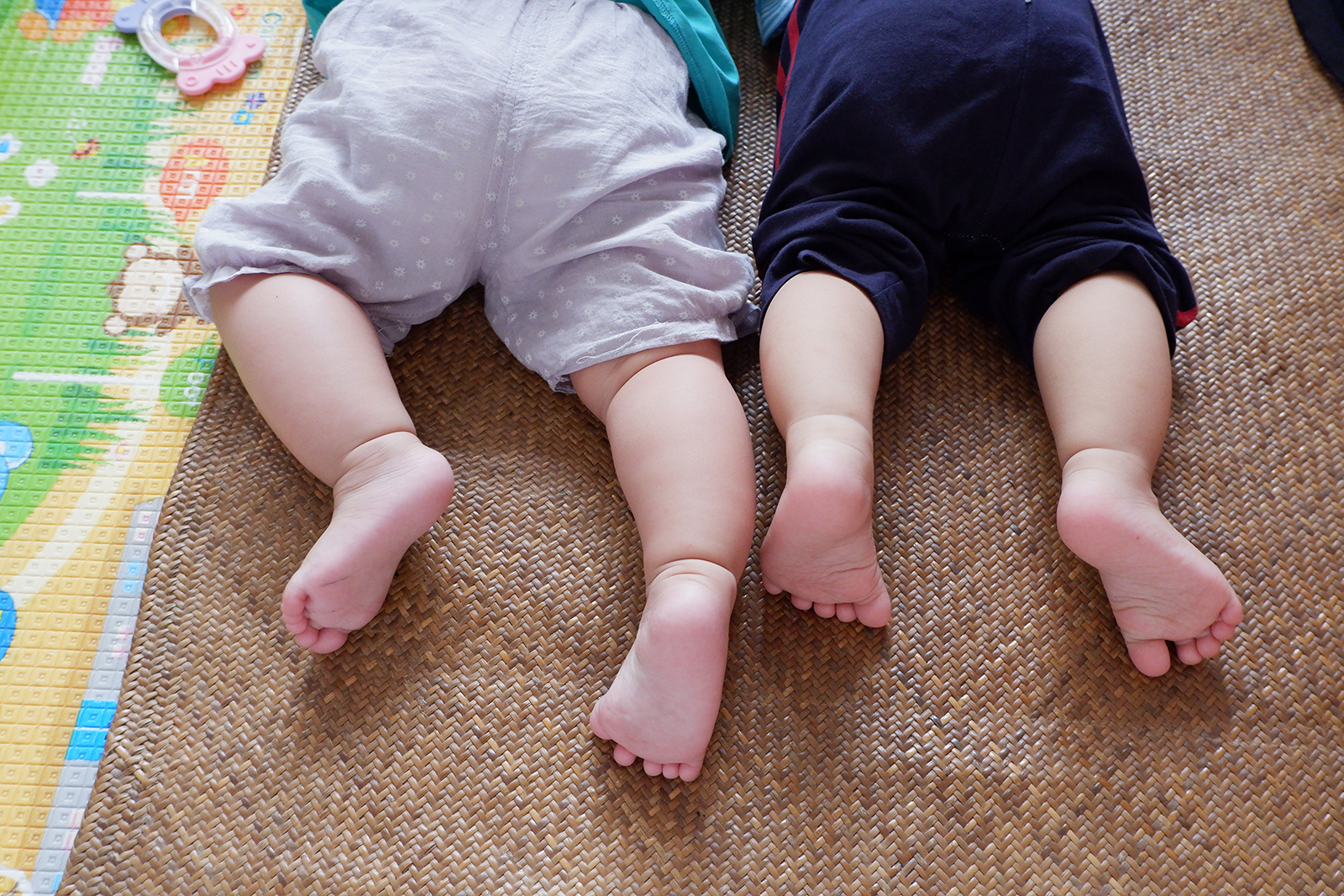
Furthermore,  you can encourage your child to learn how to move their body through tummy time.  Through this activity, you are allowing them to build strength and become mobile. To do so, put them down on a comfortable mat or blanket on the floor on their stomach, and walk around the room to motivate your little one to lift their head and continue to develop their neck muscles to see you. 

As OTs, part of our method to support engagement within a session is to play on the child’s motivations and interests. As your child continues to grow, I encourage you to do the same. Place toys nearby so that they can move and reach for them. Play games and songs with movements that they can imitate to develop an understanding of their body. Play parades or follow the leader to explore their surrounding environments. Throw or roll a soft ball back and forth. The ideas are endless and unique to each child. 

Toddlers and young children: Skills develop through practice and repetition. Children are more likely to repeat activities that are fun, supportive, encouraging and promote success. Always encourage trial and error, rather than the attainment of perfection. Break harder asks down into smaller steps and allow plenty of rest breaks when needed. Remember that children develop at different rates, gently encourage but don’t push your child to do things if they are not yet ready.

How OT’s support the development of Gross Motor Skills?

I love how fun my job is as an OT. We use a variety of games, equipment and toys to support the development of these necessary foundational skills. There are done through a variety of activities such as:

  • Visiting environments where children feel safe (at home or school) and exploring movement-based tasks that can be transferred to everyday skills.
  • Providing education to parents, carers and teachers to assist the collective understanding of supporting the child to best achieve their goals.  
  • Individually supporting sensory processing capacities to allow the child to work through challenging activities. This supports regulation and attention, as well as ensuring the body is receiving and interpreting the correct messages from the muscles in terms of their position, their relationship to each other, the speed at which they move and how much force they are using. 
  • The strengthening of core muscles in order to move the body confidently, as well as expanding upon balance, coordination, crossing midline activities, body awareness and motor planning. 
  • The breaking down of tasks or skills to become simplified components, gradually expanding the skill in its entirety to support participation and success.
  • Exploring varying duration and intensity of activities to support endurance. 

Building Gross Motor Skills at home:

In light of the current situation we are all living in, our families are asking for a greater array of ideas and experiences to continue to build upon these Gross Motor Skills. Here are some that you can do at home:

  • Skipping rope 
  • An obstacle course in the home or backyard to explore different surfaces and a variety of different movements including running, hopping, jumping, crawling etc. 
  • Bouncing, rolling, throwing, kicking or batting a ball
  • Balancing on uneven surfaces like different sized pillows or an air mattress
  • Keeping a balloon up in the air by hitting with their hands or head 
  • Water play! Splashing about in water strengthens leg muscles 
  • Dancing, walking or skipping to music, improving coordination and balance 
  • Bike riding 
  • Using body weight to gain momentum on a swing
  • Hopscotch 
  • ‘Simon Says’, which can assist in following visual cues, body awareness and motor planning 
  • Bouncing on a trampoline
  • Chasing bubbles can provide lots of fun while using arms, legs and eyes together 
  • Hula-hoops, which encourage children to activate their core muscles, ensuring further development.

That’s all for now! If you’d like some help or have a question, please don’t hesitate to reach out to our team at Explore and Soar! We are always happy to help and find the right solutions for you and your child! 

Madeleine Simms

ORIGINALLY PUBLISHED JUNE 3, 2020

Latest Posts

  • Reclaiming Potential with Clarity
  • A Year of Community for Wellbeing and End of Year Celebrations
  • School Readiness Transitioning to Kindergarten
  • Occupational Therapy in Action for Wellbeing
  • Balanced Bodies for Connected Communities

Emotional Regulation

exploreandsoar · 14 January 2024 · Leave a Comment

EMOTIONAL REGULATION

Today I want to speak about the importance of emotional regulation. Not only its development and significance in our children’s lives, but in our own as parents, caregivers and individuals. 

Emotional regulation is an important skill that is developed over time. Beginning in childhood, its development is a key milestone. Commencing with the foundational skills of co-regulation and leading into self-regulation in toddler and childhood years and eventuating into emotional intelligence in adulthood, it supports everything we do during our lives.

Self-regulation is the ability to notice, grade and modulate your own feelings, ultimately learning to respond appropriately to them. It is the ability to naturally adapt to those around you or the situation at hand. This process won’t always begin naturally with some children, some find it challenging to express themselves and others occasionally mis-interpret information that allows them to optimally adjust to their surroundings.

Emotional regulation is at the crux of everything we do. 

It starts in utero and further develops via a connection with your parents once born. It is the foundation of the connection between parents and their child from birth, that creates the building blocks for our first stage of emotional development; co-regulation.

This process allows children to learn, explore and understand what it feels like to be soothed, especially in unfamiliar or uncomfortable situations. As infants, our parents offer affection and protection from the world as we enter into it. Throughout our earliest months of life, our foundations are being solidified. We are opening our eyes, processing more and beginning to push boundaries. 

As we continue to grow, we are connecting, becoming more alert and adapting to the world around us. This is done so through our sensory systems and the motivation to learn about new surroundings. 

Co-regulation involves a mutual understanding and safety net that our parents or caregivers provide, keeping us safe as we test boundaries and explore the world. This sense of comfort can sometimes give us that little extra push we need when new scenarios or uncertainty may arise. These experiences, along with meeting others, allow us to learn some essential non-verbal social cues, beginning our journey into self-regulation. 

We begin to learn self-regulation by sharing and working through our feelings. Having people around us modeling, teaching and supporting us to learn how to manage emotions, allows us to appropriately deal with feelings. Most people develop these skills by the time they enter their teenage years.

But what if we couldn’t learn how to self-regulate emotions?What if we didn’t feel safe in our surroundings?What if we missed all the non-verbal social cues from people in our family growing up?

What if we didn’t understand the emotions we had or had any control over them – not knowing how to self-soothe or react appropriately to a situation? This is what our children go through daily before being about to self-regulate.Children have difficulty understanding their body and the many feelings that they encounter day to day. So how do we support them through this and encourage development?

It can be very overwhelming as a parent or caregiver. The fatigue and ongoing support needed to provide guidance can be exhausting. As soon as we, the adults get overwhelmed and stressed, our capacity to cope and remain in a regulated state too, gets altered. Our own ability to regulate ourselves and cope in our everyday life is challenged. Often we are faced with a sense of guilt – not being able to cope with emotion on top of emotion.

So, how can we support you but also support your children in managing their self-awareness and emotional regulation for resilience, empathy and emotional intelligence? We thought we would offer up some strategies for you, the parent or caregiver to best take care of you and your family. These are:

  • Checking in; asking yourself ‘what do I need to do to be my best self and what does my partner need to do to be their best self?’. Make a note for today, for the week for the month and for the term.
  • The everyday essentials: sleep, good food, and staying hydrated. If you’re sleeping and eating well then you are supporting your body in the best way, having energy to work through the day
  • Setting weekly intentions: set 3 realistic activities to achieve in the week that would make a difference to you and your family. One for yourself, one for your children and one for your family as a whole.
  • Daily Intentions: sitting down and making a plan for each day to work towards these goals for the week. Do the important things first.
  • Build your tribe: don’t be afraid to ask for help and reach out to those in your community.
  • Breathe and Move: find what works for you. Mindfulness, exercise or even having coffee with a friend. Take a moment and a deep breath with things get too stressful. 

Once you’ve taken care of your own emotional well-being, look to your children. They too need support and strategies to continue to grow and develop their minds, empathy and social connections. The below strategies can be used before and after interactions, or even sometimes in the moment. 

  • Build Body awareness: move, explore and climb. Get your children using their core and bodies in challenging ways. This increases their gross motor skills, posture control but also builds upon their body awareness and understanding themselves in space. 
  • Experience emotions: let your children experience a range of emotions, help them understand what these emotions are and how to work through them by discussing their feelings.
  • Modeling: don’t be afraid to get on the floor and act silly, expressing your emotions and how your body responds. Act out how you self-regulate and what strategies work for you to calm your body. Modeling emotional regulation strategies is very powerful for our children.
  • Repair: Never forget the importance of repair. Talking and working through a situation to help provide clarity, understand perspectives and to emotionally interact with others is very powerful. Our children need to know when to say sorry and why. 

These strategies don’t always work for our children in the moment or when they are in a heightened state. It’s also ok to let them feel the emotion and allow it to eventually pass. In these moments, you can employ strategies to offer support if they attempt to reach out, these include: 

  • Remaining available: remaining open and available to your child to let them know you are there as reassurance (even if sometimes they are telling you to “go away”)
  • Ice chips or cold packs; chewing on ice chips, ice blocks or having ice packs available is a natural body reset. The coolness will help the child regulate their body temperature and start to cool down, inadvertently calming their emotions..
  • Providing deep pressure or hugs (heavy work and deep pressure is a natural calmer and regulator). Each child reacts to this differently; some love hugs, others love to throw, hit or kick things. It is finding safe activities and strategies for them at that moment.
  • Phrases of reassurance that you can offer up such as – ‘You are safe, It’s ok, and I love you’
  • Respiration and breathing activities: bubbles, water,  or even a cup with a straw are all ways to practice breathing in order to calm your child down. 

Your own emotional regulation and health as an individual and as a parent is a central priority. In order for you to be a good parent, you need to self soothe and look after your own well being. If you are not ok, then your children are not ok. Please implement and give these strategies listed above a go to aid or expand upon what already works for you and your family. If you have any additional questions, thoughts or ideas, please do not hesitate to contact the Explore and Soar team, as our passion lies in helping our families on all levels. Supporting our families and building our children up to have great emotional awareness for themselves and empathy for others is perhaps one of the greatest things we as therapists get to do.

Hope to hear from you soon,

Jess

ORIGINALLY PUBLISHED MARCH 4, 2020

Latest Posts

  • Reclaiming Potential with Clarity
  • A Year of Community for Wellbeing and End of Year Celebrations
  • School Readiness Transitioning to Kindergarten
  • Occupational Therapy in Action for Wellbeing
  • Balanced Bodies for Connected Communities
  • « Go to Previous Page
  • Page 1
  • Interim pages omitted …
  • Page 5
  • Page 6
  • Page 7

Subscribe to our newsletter

Receive our news and updates via email. That's all.

View our Terms of Use.

Your feedback is always valued at Explore & Soar. If you have some feedback to help us support your needs better, please click here and share your valued feedback with us today.

STAY CONNECTED

  • mobile
  • mail
  • facebook
  • instagram

Explore and Soar

Explore and Soar © 2026 · Site by Design et Cetera

Explore and SoarLogo Header Menu
  • Home
  • Services
  • Model of Therapy
  • Job Opportunities
    • Paediatric OT
    • Mental Health OT
    • New Graduates
    • OT Student Placements
    • Allied Health Assistants
    • Client Support Roles
    • Job Opportunities Enquiry Form
  • News
    • Blog
    • Newsletters
  • About
  • Contact
    • General Enquiry Form
    • New Client Waitlist Enquiry
    • Parent FAQs
    • NDIS FAQs
    • Career FAQs