• Skip to primary navigation
  • Skip to main content
Menu
  • Services
  • Model of Therapy
  • Job Opportunities
    • Paediatric OT
    • Mental Health OT
    • New Graduates
    • OT Student Placements
    • Allied Health Assistants
    • Client Support Roles
    • Job Opportunities Enquiry Form
EXPLORE & SOAR new Logo FC RGB 600px
Menu
  • News
    • Blog
    • Newsletters
  • About
  • Contact
    • Parent FAQs
    • NDIS FAQs
    • Career FAQs
    • General Enquiry Form
    • New Client Waitlist Enquiry

exploreandsoar

Participation Matters: Because Childhood Is Meant To Be Lived

exploreandsoar · 6 October 2026 · Leave a Comment

PARTICIPATION MATTERS: BECAUSE CHILDHOOD IS MEANT TO BE LIVED.
Celebrating OT Week 2026 | 26 October – 1 November.

October is here, which means one of our favourite weeks of the year is almost here too — OT Week! This year, Occupational Therapy Australia’s theme is simple but powerful: Participation Matters.

And for us at Explore and Soar, those two words capture exactly why Occupational Therapy matters.

What Does Participation Really Mean?

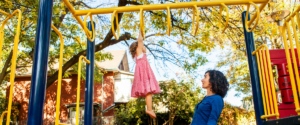
Participation is being able to take part in your own life. For our children, that might mean playing with friends, getting dressed, climbing at the playground, sitting with their class, going to a birthday party, helping make dinner or trying something new.

It isn’t about doing these things perfectly. It is about having the opportunity to show up, have a go, belong and experience life.

The Skill Is Not The Final Goal

As Occupational Therapists, we talk about fine motor skills, gross motor skills, sensory processing, emotional regulation, self-care and social development. But the skill itself is rarely the end goal.

  • We build hand strength so a child can open their lunchbox, draw, play or get dressed.
  • We support regulation so they can stay connected during play, cope with change or participate at school.
  • We explore sensory processing so they can better understand their body and engage in the environments that matter to them.
  • We develop movement skills so they can climb, explore, play and keep up with the adventures of childhood.

The skill matters because of what it allows the child to do.

Sometimes We Need to Step Back So They Can Step Forward

As parents, educators and therapists, we naturally want to protect children from getting hurt, becoming frustrated or failing. But sometimes, with the very best intentions, we can step in too quickly.

“Careful!”
“I’ll do it.”
“That’s too hard.”
“Let me help.”

Healthy, appropriate risk is part of participation. Children need opportunities to climb, wobble, make mistakes, solve problems, lose the game, spill the milk, try the zipper and work out what to do next.

This doesn’t mean putting children in unsafe situations. It means creating safe enough opportunities to try — while we stay close enough to support them when they need us.

Sometimes our role isn’t to remove the challenge. It is to help our child feel safe enough to explore it. 

Participation Is Where Development Happens

Children learn about themselves by doing. Through everyday participation they discover what their body can do, solve problems, communicate, adapt, experience success and failure, and build confidence to try again.

Participation also looks different for every child. One child might jump straight into the birthday party while another watches from beside Mum first. One child may write their story with a pencil while another types it. One child may communicate with words while another uses gestures, visuals or a device.

Different doesn’t mean less meaningful.

Our goal is not to make every child participate in exactly the same way. It is to help them find ways to confidently connect in their world; their way.

How Can We Support Participation?

Start with everyday life. Give your child opportunities to:

  • Help make breakfast, even if it takes longer;
  • Try their buttons or shoes before you step in;
  • Carry the groceries or help with a household job;
  • Climb, balance, jump and explore through safe play;
  • Order their own food or ask for what they need;
  • Solve a small problem before you provide the answer.

And when it doesn’t work the first time, instead of fixing it straight away, try asking: “What could we try next?”

Because Their Life Is Happening Now

Across the years, we have shared blogs about movement, fine motor skills, sensory processing, toileting, emotional regulation, play, relationships, transitions and parent coaching.

All of those conversations lead us back to participation.

We don’t build skills simply for children to become better at skills. We build skills so they can live their lives.

Play.
Connect.
Learn.
Explore.
Belong.
Experience joy.
Make mistakes.
Build independence.
Discover what they are capable of.
SOAR.

As we celebrate OT Week 2026 and continue our theme of Reclaiming Potential with Clarity, perhaps the question isn’t:

“Can my child do this perfectly?”

Perhaps it is:

“How can I help my child participate in what matters to them?”

Because when we give children opportunities to actively experience their world, we give them more than another skill.

We give them opportunities to live it. That is why Participation Matters.

Until next time,
Lori and the Explore & Soar team


PUBLISHED OCTOBER 2026
Latest Posts

  • Participation Matters: Because Childhood Is Meant To Be Lived
  • Growing Against Gravity: How Movement Builds Strong and Confident Bodies
  • More Than Just Toilet Training
  • Strong Hands Through Play Building Confidence, One Squeeze at a Time
  • What’s Really Behind Your Child’s Gross Motor Skills?

Growing Against Gravity: How Movement Builds Strong and Confident Bodies

exploreandsoar · 7 September 2026 · Leave a Comment

GROWING AGAINST GRAVITY:
HOW MOVEMENT BUILDS STRONG AND CONFIDENT BODIES

Have you ever watched a baby lying on their tummy, trying with all their might to lift their head and look towards you?

It might seem like such a small movement, but there is a lot happening underneath!

From lifting their head, to rolling, sitting, crawling, standing, walking and eventually running, climbing and jumping, our children are constantly learning how to move their bodies against one force that never goes away — gravity.

As we continue our 2026 theme, Reclaiming Potential with Clarity, we are looking more closely at Sensory Processing and the foundations that help children confidently move, play and participate in their everyday world.

This month, we’re bringing together some concepts we have explored before — primitive reflexes, the vestibular system and gross motor development — to understand one more piece of the puzzle.

What Does Gravity Have to Do With Development?

Gravity is always there.

Every time your child lifts their head, pushes themselves up from the floor, sits upright, stands, climbs or jumps, their body is learning how to work with and against gravity.

Think back to those very first weeks of life.

You might remember your baby lying on your chest and briefly lifting their head to look towards you. Later, tummy time became pushing through their arms, rolling, reaching and eventually moving away from the floor. These early experiences help build the foundations for later movement.

Over time, working against gravity supports children to develop the strength, stability, balance and coordination they need to participate in everyday activities.

But How Does Our Body Know Where It Is?

This is where our vestibular system comes in.

Last year, we explored the vestibular system in our blog, Balanced Bodies for Connected Communities. The vestibular system is located within the inner ear and provides our brain with information about movement, gravity and the position of our head.

It helps our body to work out:

  • Am I upright or leaning?
  • Am I moving or staying still?
  • Which direction am I moving?
  • How quickly am I moving?
  • Where is my head in relation to the rest of my body?

Our vestibular system doesn’t work alone. It constantly communicates with our eyes, ears, muscles, joints, eyes and other sensory systems to help us adjust our posture, maintain our balance and move safely through the world.

And Where Do Reflexes Fit?

There is another piece to this developmental story.

In our 2024 blog, Understanding Reflexes for Gross Motor Development, we explored how primitive reflexes provide some of our earliest automatic movement patterns.

As babies develop and experience movement, these early patterns contribute to the foundations upon which increasingly controlled movement develops. One example we discussed was the Tonic Labyrinthine Reflex (TLR), which is associated with head position, movement patterns and the body’s early response to gravity.

Rather than thinking about reflexes, sensory processing, muscle development and gross motor skills as completely separate areas, it can be helpful to think about development as many systems working together. Our children are constantly learning: “Where am I? How does my body feel? What happens when I move? And how do I keep myself safe and stable while I do it“?

What Might We Notice in Everyday Life?

For some children, working against gravity and maintaining their body position can require a lot of effort.

You might notice your child:

  • Slouches or leans during table activities.
  • Frequently lies across the floor or furniture.
  • Tires quickly during physical activities.
  • Finds climbing more difficult than their peers.
  • Avoids playground equipment where their feet leave the ground.
  • Finds balancing challenging.
  • Appears cautious on uneven or unfamiliar surfaces.
  • Constantly seeks jumping, spinning, climbing or crashing activities.
  • Finds it difficult to keep their body upright during seated activities.
  • Prefers activities where their body feels well supported.

One behaviour on its own doesn’t necessarily mean something is wrong. What we’re interested in is the pattern and whether it is affecting your child’s ability to participate confidently in their everyday activities. 

Helping Children Explore Gravity Through Play

Movement doesn’t need to look like an exercise program. In fact, some of the richest opportunities for children to develop their movement skills happen through play.

Here are some activities we may use therapeutically or encourage families to explore at home:

🐻 Get Down on the Floor

Crawling, bear walks, crab walks and moving through tunnels encourage children to support their body against gravity while using their arms, shoulders and core.

Try creating a simple obstacle course using cushions, tunnels and furniture.

Move Up and Down and Around 

Climbing playground equipment, walking up hills, moving over cushions or climbing onto safe surfaces gives children different experiences of their body moving through space. 

Start where your child feels confident and gradually build from there.

⚽ Push, Pull and Carry

Push a washing basket filled with toys, pull a wagon, carry groceries, move cushions or help with gardening.

These activities provide valuable proprioceptive input alongside movement and can help children feel more aware of where their body is.

🌳 Change the Surface

Walking across grass, sand, stepping stones, cushions or gentle slopes requires the body to continually adjust to changes underneath it.

Turn it into an adventure rather than an exercise!

🎶 Rock and Move

Gentle rocking, swinging or rhythmic movement can provide vestibular input.

For children who are cautious with movement, begin slowly and predictably. Let your child feel in control and stop if they become uncomfortable.

🤸 Play With Different Body Positions

Try lying on the tummy to complete a puzzle, kneeling at a low table, reaching while sitting on the floor or playing in different positions.

Changing positions encourages the body to work against gravity in different ways.

Follow Your Child’s Body

This is one of the most important parts. More movement isn’t always better.

Children process sensory information differently. One child may love spinning, swinging and climbing, while another may find the same movement overwhelming or unsafe.

Continued Observations to Build Children’s Confidence in Play

Rather than pushing a child through an activity, observe their response:

  • Are they smiling and engaged?
  • Are they becoming more organised or more unsettled?
  • Are they asking for more?
  • Are they trying to escape or hold onto you?
  • Can they return to a calm state afterwards?

These observations give us important clues about what their sensory system may need. Therapeutic movement should be purposeful, individualised and responsive to the child, particularly when a child has significant sensory or vestibular differences.

Looking Beneath the Movement

When a child says, “I can’t climb that,” there may be more happening than confidence. When they constantly seek movement, there may be more happening than simply having lots of energy. When they lie across their chair during homework, there may be more happening than poor attention.

This Is Where Clarity Matters

At Explore and Soar, we look beyond what we can immediately see and consider the foundations underneath the activity. What is their body telling us?

Understanding the relationship between sensory processing, movement, posture and gravity can help us choose strategies that support the individual child rather than simply expecting them to try harder. That is part of Reclaiming Potential with Clarity.

How Can Occupational Therapy Help?

Occupational Therapists can explore how a child’s sensory processing, postural control, balance, coordination and movement skills are affecting their participation in everyday life.

Therapy may include playful movement experiences, environmental adaptations, sensory strategies, parent coaching and activities that can be incorporated into home, preschool, school and community routines. Because ultimately, we’re not developing movement skills just so a child can climb, balance or sit upright. We’re helping them build the foundations they need to play with their friends, participate at school, explore their community and confidently connect with the world around them.

If you’re wondering whether sensory processing, movement or postural development may be making everyday activities harder for your child, speak with your treating Occupational Therapist or contact the Explore and Soar team by calling 0477 708 217 or sending an email to admin@exploreandsoar.com.au.

Until next time,
Jess


PUBLISHED SEPTEMBER 2026

Latest Posts

  • Participation Matters: Because Childhood Is Meant To Be Lived
  • Growing Against Gravity: How Movement Builds Strong and Confident Bodies
  • More Than Just Toilet Training
  • Strong Hands Through Play Building Confidence, One Squeeze at a Time
  • What’s Really Behind Your Child’s Gross Motor Skills?

More Than Just Toilet Training

exploreandsoar · 4 August 2026 · Leave a Comment

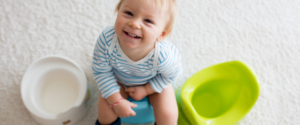
More Than Just Toilet Training:
Understanding What’s Really Behind the Challenge

As we continue exploring our 2026 theme, Reclaiming Potential with Clarity, we’re looking beyond the challenge of toilet training and asking an important question: what’s really happening for my child?

Toilet training is one of those parenting milestones that almost every family experiences differently.

Some children seem to master it quickly, while others need a little more time, support and understanding. If you’ve ever wondered why your child isn’t quite “getting it” yet, you’re not alone.

At Explore and Soar, we know that successful toileting isn’t just about learning to use the toilet. It’s about understanding what your child’s body is telling them and helping them develop the skills they need to respond confidently.

Understanding Your Child’s Body

Toileting is one of our everyday self-care skills, just like eating, sleeping, dressing and showering. One of the biggest helpers in learning these skills is a sensory system called interoception.

Interoception is our body’s internal messenger. It tells us when we’re hungry, thirsty, tired, too hot, too cold, if we are in pain or when we need to use the toilet. As children grow, they gradually learn to recognise these body signals and respond to them. For some children, this awareness develops naturally, while others need extra support to understand what their body is trying to tell them.

There Is Often More Than One Reason

If your child is finding toileting difficult, it doesn’t necessarily mean they’re not trying. Sometimes there are underlying reasons that make toileting more challenging. These might include:

  • Difficulty recognising when they need to use the toilet.
  • Reduced core strength or gross motor skills, making it harder to sit and balance.
  • Challenges following the sequence of toileting.
  • Sensory sensitivities around the toilet environment.
  • Retained reflexes that may influence continence.
  • Feeling worried or uncertain about using the toilet or public toilets such as school or community.

Understanding why your child is finding toileting difficult helps us choose the right strategies to support them.

Our Favourite Strategies

Every child is different, so there isn’t one approach that works for everyone. However, these are some of our favourite ways to support children as they learn.

  • Wait until your child begins showing awareness of being wet or needing the toilet.
  • Talk through each step of toileting as it happens. Children learn so much by watching, listening and joining in.
  • Use visual schedules to break the routine into manageable steps.
  • Make sure everyone supporting your child uses the same approach at home, preschool or school.
  • Keep the experience positive and playful with songs, encouragement, rewards where needed and praise. 
  • If your child needs extra support, don’t be afraid to ask for help early. 

Before You Begin… Our Biggest Piece of Advice is Simple

Observe your child. Notice when they seem aware of needing the toilet. Notice what they find easy. Notice what feels difficult. Notice what happens before accidents occur.

The more we understand what is happening for your child, the easier it becomes to choose strategies that support their success. Remember, toilet training is not a race.

Every child develops at their own pace, and progress will rarely be a straight line. There will be successes, setbacks and plenty of learning along the way. Be patient with your child and just as importantly, be kind to yourself.

We’re Here to Help

At Explore and Soar, we believe every child deserves the opportunity to participate confidently in everyday life, and toileting is no different. If you’re feeling unsure about where to start, or your child is finding toileting particularly challenging, we’d love to help. Speak with your treating therapist or contact the Explore & Soar team by calling 0477 708 217 or sending an email to admin@exploreandsoar.com.au.

Together, we can understand what’s happening, build the right foundations and support your child to achieve greater confidence and independence.

Until next time,
Jess


PUBLISHED AUGUST 2026

Latest Posts

  • Participation Matters: Because Childhood Is Meant To Be Lived
  • Growing Against Gravity: How Movement Builds Strong and Confident Bodies
  • More Than Just Toilet Training
  • Strong Hands Through Play Building Confidence, One Squeeze at a Time
  • What’s Really Behind Your Child’s Gross Motor Skills?

Strong Hands Through Play Building Confidence, One Squeeze at a Time

exploreandsoar · 1 July 2026 · Leave a Comment

Strong Hands Through Play:
Building Confidence, One Squeeze at a Time

As we continue exploring our 2026 theme, Reclaiming Potential with Clarity, we’re focusing this month on fine motor development and one question we often hear from families is “why does my child find tasks like handwriting, buttoning clothes, using cutlery or opening containers so difficult?”

While these activities may seem simple, they rely on strong and coordinated muscles in the hands, fingers and wrists.

When children find these tasks challenging, it’s important to look beyond the skill itself and understand the foundations that support it. Questions we might ask include:

  • Does your child have difficulty sitting for a period of time?
  • Does your child tire easily when writing?
  • Do they prefer using their hands instead of utensils or pencils during the day?
  • Do they become frustrated with dressing tasks?
  • Do they struggle to manipulate small objects?

These challenges can sometimes indicate that the muscles and coordination skills within the hands are still developing. Often, when families come to us with concerns about fine motor development, one of the tools we may introduce is Theraputty. It might look like a simple piece of putty, but when used purposefully, it can help strengthen the foundations needed for many everyday activities.

What is Theraputty?

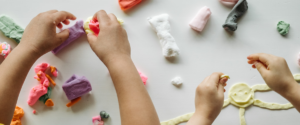
One tool occupational therapists often use to support hand strength and fine motor development is Theraputty, a resistive putty that looks similar to playdough but provides greater resistance, making the muscles in the hands and fingers work harder. At Explore & Soar, we regularly use Theraputty in therapy sessions and may recommend it as part of a home program to support ongoing skill development.

The best part? Children often see it as play, while we know they’re building important foundations for everyday activities.

Why Do We Use It?

Theraputty can help develop:

  • Hand and finger strength
  • Pencil grasp and control
  • Coordination
  • Bilateral hand use
  • Dexterity and manipulation skills
  • Independence in everyday tasks
  • Engagement for extended period of time

These skills support participation in activities such as handwriting, dressing, eating, craft, construction play and many other daily routines.

Making Strengthening Fun

One of the reasons we love Theraputty is its versatility. There are endless ways to make strengthening engaging and playful.

Some of our favourite activities include:

  • Rolling the putty into balls or snakes
  • Pinching scales onto a snake using fingertips
  • Squashing it into pancakes or pizzas
  • Hiding small objects inside for a treasure hunt
  • Creating letters and names with rolled pieces
  • Stretching, pulling and squeezing with both hands

These activities help strengthen little hands while keeping children motivated and engaged.

Strong Hands Create Opportunities

At Explore & Soar, we know that fine motor development is about much more than strengthening hands.

It is about supporting your children, engaging with their friends, getting ready in the morning and having fun whilst doing it. By focusing on fine motor development, we’re helping our children to develop strong, coordinated hands which can help to;

  • Write with greater confidence
  • Manage dressing tasks more independently
  • Use cutlery effectively
  • Engage in craft activities
  • Participate in classroom tasks
  • Develop confidence in everyday life

When we understand the foundations behind a challenge, we can provide support that is purposeful, specific and meaningful for every child and family we work with. 

That is what Reclaiming Potential with Clarity is all about.

We’d love to Support Your Family

If you’ve noticed your child finding fine motor tasks difficult, or you’re wondering whether additional support may help, we’d love to have that conversation with you. Speak with your treating therapist or contact the Explore & Soar team by calling 0477 708 217 or sending an email to admin@exploreandsoar.com.au

Together, we can explore what is behind the challenge and support your child to build the foundations for confidence, participation and success.

Until next time,
Sophie


PUBLISHED JULY 2026

Home Resources

Here is a visual Theraputty home program handout we’ve created for you to start today.

Latest Posts

  • Participation Matters: Because Childhood Is Meant To Be Lived
  • Growing Against Gravity: How Movement Builds Strong and Confident Bodies
  • More Than Just Toilet Training
  • Strong Hands Through Play Building Confidence, One Squeeze at a Time
  • What’s Really Behind Your Child’s Gross Motor Skills?

What’s Really Behind Your Child’s Gross Motor Skills?

exploreandsoar · 1 June 2026 · Leave a Comment

What’s Really Behind Your Child’s Gross Motor Skills?

Let’s Begin at the Start

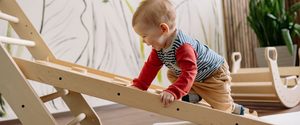
From the very beginning of life, your child is learning how to move. In the early months, this may look like curling into your chest, lifting their head during tummy time, pushing up through their arms, rolling from side to side, or reaching for a toy. As they grow, these early movements become crawling, sitting, pulling to stand, climbing, walking, running and jumping.

These are not just milestones – they are building their foundations of ‘Motor Patterns’ that support how to move in space, how much force to use, move both sides of the body together, and how to feel safe and steady in an organised, coordinated and confident way. All motor patterns stem from our reflexes, here’s the blog link to learn more.

This is why occupational therapists often look beyond whether a child can complete a skill and focus on how they move. A child may be able to run, climb or jump, but still use extra tension, speed, effort or avoidance to stay in the activity instead of moving with ease and control. Understanding these foundational movement patterns helps us identify what a child’s body may still be learning.

Flexion and Extension: Learning to Move the Body In and Out with Control

One of the earliest motor patterns children develop is flexion and extension. 

  • Flexion is the body’s ability to curl, bend and bring the body inwards. 
  • Extension is the ability to straighten, push, lift and move against gravity. 

These patterns begin during tummy time, rolling and floor play as babies learn to balance curling up, bringing their hands and feet into the middle of their body and stretching movements, lifting up their head, pushing arms up and away from the body. As children grow, this foundation supports sitting upright, climbing, running, jumping, landing and changing direction.

When flexion and extension are well developed, children move with more ease and control through the front and back of their body. Their body can activate when needed and relax afterwards. They may be able to sit, play, climb and move without constantly needing to adjust their body.

When this pattern is still developing, some children may use different strategies to help feel in control:

  • Hold tension through their neck, shoulders or body to stay upright
  • Move stiffly or brace themselves
  • Appear rigid in movements
  • Collapsed, slouch, lean on furniture or tire easily
  • Lying down often
  • Tiring quickly
  • Prefer to be inside to play than outside
  • Struggle to maintain attention and regulation because so much energy is used to stabilise the body

In occupational therapy, activities such as rolling, climbing, swinging, rough play, bouncing on exercise balls and crashing into mats are used in a tailored way. This helps children build body awareness and movement control in a playful fun way. 

The beauty of all of these activities is that they can also be done at home, in your backyard or at a park with a grassy hill and swings.

Top and Bottom: Learning to Stabilise for Movement together

Top and bottom motor patterns refer to how the upper body and lower body work together. Children need to develop stability through their hips, legs, trunk, shoulders and arms so that their body can move in an organised way.

This foundation supports:

  • Crawling and climbing
  • Jumping and balancing
  • Stepping over objects 
  • Walking on uneven surfaces
  • Moving safely through playgrounds
  • Standing at the sink to brush teeth
  • Balancing whilst putting pants on 
  • Climbing into the car
  • Sitting at a table for drawing or eating

When this pattern is working well, a child can keep their body steady while their arms or legs move. Their movement looks more controlled and organised.

When it is still developing, movement may look effortful or less coordinated. Children may:

  • Move their whole body as one piece
  • Arms or head collapses during movements or forget arms or legs when climbing – moving arms first or only legs. 
  • Seek crashing or movement to feel more organised
  • Avoid movement because it feels unpredictable
  • Use momentum to move through an activity and not activation of muscles.

OT sessions often target this pattern through obstacle courses, balancing on beams, climbing over, under or through equipment, crawling through tunnels and pushing balls, and stepping stone activities, moving through crash mats that combine movement with stability in a fun and meaningful way. 

What has been a fun obstacle course or activity that your children have loved? Was it made at home or somewhere in your community?

Left and Right: Building Coordination, Rhythm and Flow

The left and right motor pattern is how the two sides of the body work together. This includes using both sides of the body at the same time; alternating sides, crossing the middle of the body, using one side to stabilise while the other side completes a task and coordination movements smoothly.  

This pattern develops through crawling, walking, climbing and later supports:

  • Ball skills
  • Riding bikes or scooters
  • Playground games
  • Sport and dance
  • Motor planning and coordination

When left and right integration is well developed, movement looks rhythmic and automatic.

When this pattern is still developing, children may:

  • Rely heavily on one side of the body
  • Avoid crossing the middle
  • Swap hands during activities
  • Find ball skills or bike riding difficult
  • Struggle with coordination during play
  • Avoid playground equipment
  • Look more effortful and hard work to keep going 
  • They may know what they want to do, but their body may not yet know how to put the movement together smoothly

These challenges can also affect social participation when games feel too fast or unpredictable. This can become too overwhelming and have difficulty adjusting their body to the environment and others around them. 

In OT, activities such as crawling, animal walks, climbing, scooter boards, swings and throwing games help both sides of the body work together through timing and rhythmicity while building confidence and body awareness.

Why These Foundations Matters Beyond Gross Motor Skills

Motor patterns are important because they sit underneath so many of the skills families care about. They support:

  • Running, jumping and climbing
  • Handwriting and sitting posture
  • Dressing and toileting
  • Using cutlery and opening lunchboxes
  • Participating and joining in school, sport and family life

Movement foundations are also closely linked to emotional regulation. When a child’s body feels organised and stable movement can help them feel calm, alert and manage emotions. When movement feels unstable, effortful or unclear, the body has to work harder, children may appear avoidant, frustrated, silly or overwhelmed.

Reclaiming Potential with Clarity

When your child is bouncing on an exercise ball, crashing into mats, crawling through tunnels, swinging, climbing, rolling, balancing, pushing or pulling, they are not just playing. They are learning how to organise their body, use their muscles with control, understand where they are in space, coordinate both sides of their body, be more confident in movement and feel safe in their environment. By understanding motor patterns, we can look beneath the surface and see what a child’s body may still be learning. 

Check out some previous blogs that may give you ideas on what you can do in the community and different gross motor activities you can do at home that target your tummy neck and shoulder muscles.

Occupational therapy uses purposeful play to strengthen these foundational motor patterns so bigger skills can develop with more ease. By understanding what sits underneath movement, we can better support children exactly where they are in their development. If you have been wondering whether your child could benefit from this kind of support, we would love to have that conversation with you. Reach out to your treating clinician or touch base with us here or call 0477 708 217.

Until next time,
Maddie


If you’d like to chat more, please don’t hesitate to contact us today! Call us on 0477 708 217 or email admin@exploreandsoar.com.au


PUBLISHED JUNE 2026

Latest Posts

  • Participation Matters: Because Childhood Is Meant To Be Lived
  • Growing Against Gravity: How Movement Builds Strong and Confident Bodies
  • More Than Just Toilet Training
  • Strong Hands Through Play Building Confidence, One Squeeze at a Time
  • What’s Really Behind Your Child’s Gross Motor Skills?
  • Page 1
  • Page 2
  • Page 3
  • Interim pages omitted …
  • Page 15
  • Go to Next Page »

Subscribe to our newsletter

Receive our news and updates via email. That's all.

View our Terms of Use.

Your feedback is always valued at Explore & Soar. If you have some feedback to help us support your needs better, please click here and share your valued feedback with us today.

STAY CONNECTED

  • mobile
  • mail
  • facebook
  • instagram

Explore and Soar

Explore and Soar © 2026 · Site by Design et Cetera

Explore and SoarLogo Header Menu
  • Home
  • Services
  • Model of Therapy
  • Job Opportunities
    • Paediatric OT
    • Mental Health OT
    • New Graduates
    • OT Student Placements
    • Allied Health Assistants
    • Client Support Roles
    • Job Opportunities Enquiry Form
  • News
    • Blog
    • Newsletters
  • About
  • Contact
    • General Enquiry Form
    • New Client Waitlist Enquiry
    • Parent FAQs
    • NDIS FAQs
    • Career FAQs