GROWING AGAINST GRAVITY:
HOW MOVEMENT BUILDS STRONG AND CONFIDENT BODIES
Have you ever watched a baby lying on their tummy, trying with all their might to lift their head and look towards you?
It might seem like such a small movement, but there is a lot happening underneath!
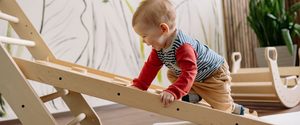
From lifting their head, to rolling, sitting, crawling, standing, walking and eventually running, climbing and jumping, our children are constantly learning how to move their bodies against one force that never goes away — gravity.
As we continue our 2026 theme, Reclaiming Potential with Clarity, we are looking more closely at Sensory Processing and the foundations that help children confidently move, play and participate in their everyday world.
This month, we’re bringing together some concepts we have explored before — primitive reflexes, the vestibular system and gross motor development — to understand one more piece of the puzzle.
What Does Gravity Have to Do With Development?
Gravity is always there.
Every time your child lifts their head, pushes themselves up from the floor, sits upright, stands, climbs or jumps, their body is learning how to work with and against gravity.
Think back to those very first weeks of life.
You might remember your baby lying on your chest and briefly lifting their head to look towards you. Later, tummy time became pushing through their arms, rolling, reaching and eventually moving away from the floor. These early experiences help build the foundations for later movement.
Over time, working against gravity supports children to develop the strength, stability, balance and coordination they need to participate in everyday activities.
But How Does Our Body Know Where It Is?
This is where our vestibular system comes in.
Last year, we explored the vestibular system in our blog, Balanced Bodies for Connected Communities. The vestibular system is located within the inner ear and provides our brain with information about movement, gravity and the position of our head.
It helps our body to work out:
- Am I upright or leaning?
- Am I moving or staying still?
- Which direction am I moving?
- How quickly am I moving?
- Where is my head in relation to the rest of my body?
Our vestibular system doesn’t work alone. It constantly communicates with our eyes, ears, muscles, joints, eyes and other sensory systems to help us adjust our posture, maintain our balance and move safely through the world.
And Where Do Reflexes Fit?
There is another piece to this developmental story.
In our 2024 blog, Understanding Reflexes for Gross Motor Development, we explored how primitive reflexes provide some of our earliest automatic movement patterns.
As babies develop and experience movement, these early patterns contribute to the foundations upon which increasingly controlled movement develops. One example we discussed was the Tonic Labyrinthine Reflex (TLR), which is associated with head position, movement patterns and the body’s early response to gravity.
Rather than thinking about reflexes, sensory processing, muscle development and gross motor skills as completely separate areas, it can be helpful to think about development as many systems working together. Our children are constantly learning: “Where am I? How does my body feel? What happens when I move? And how do I keep myself safe and stable while I do it“?
What Might We Notice in Everyday Life?
For some children, working against gravity and maintaining their body position can require a lot of effort.
You might notice your child:
- Slouches or leans during table activities.
- Frequently lies across the floor or furniture.
- Tires quickly during physical activities.
- Finds climbing more difficult than their peers.
- Avoids playground equipment where their feet leave the ground.
- Finds balancing challenging.
- Appears cautious on uneven or unfamiliar surfaces.
- Constantly seeks jumping, spinning, climbing or crashing activities.
- Finds it difficult to keep their body upright during seated activities.
- Prefers activities where their body feels well supported.
One behaviour on its own doesn’t necessarily mean something is wrong. What we’re interested in is the pattern and whether it is affecting your child’s ability to participate confidently in their everyday activities.
Helping Children Explore Gravity Through Play
Movement doesn’t need to look like an exercise program. In fact, some of the richest opportunities for children to develop their movement skills happen through play.
Here are some activities we may use therapeutically or encourage families to explore at home:
🐻 Get Down on the Floor
Crawling, bear walks, crab walks and moving through tunnels encourage children to support their body against gravity while using their arms, shoulders and core.
Try creating a simple obstacle course using cushions, tunnels and furniture.
Move Up and Down and Around
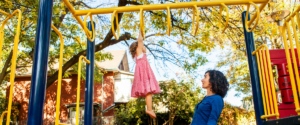
Climbing playground equipment, walking up hills, moving over cushions or climbing onto safe surfaces gives children different experiences of their body moving through space.
Start where your child feels confident and gradually build from there.
⚽ Push, Pull and Carry
Push a washing basket filled with toys, pull a wagon, carry groceries, move cushions or help with gardening.
These activities provide valuable proprioceptive input alongside movement and can help children feel more aware of where their body is.
🌳 Change the Surface
Walking across grass, sand, stepping stones, cushions or gentle slopes requires the body to continually adjust to changes underneath it.
Turn it into an adventure rather than an exercise!
🎶 Rock and Move
Gentle rocking, swinging or rhythmic movement can provide vestibular input.
For children who are cautious with movement, begin slowly and predictably. Let your child feel in control and stop if they become uncomfortable.
🤸 Play With Different Body Positions
Try lying on the tummy to complete a puzzle, kneeling at a low table, reaching while sitting on the floor or playing in different positions.
Changing positions encourages the body to work against gravity in different ways.
Follow Your Child’s Body
This is one of the most important parts. More movement isn’t always better.
Children process sensory information differently. One child may love spinning, swinging and climbing, while another may find the same movement overwhelming or unsafe.
Continued Observations to Build Children’s Confidence in Play
Rather than pushing a child through an activity, observe their response:
- Are they smiling and engaged?
- Are they becoming more organised or more unsettled?
- Are they asking for more?
- Are they trying to escape or hold onto you?
- Can they return to a calm state afterwards?
These observations give us important clues about what their sensory system may need. Therapeutic movement should be purposeful, individualised and responsive to the child, particularly when a child has significant sensory or vestibular differences.
Looking Beneath the Movement
When a child says, “I can’t climb that,” there may be more happening than confidence. When they constantly seek movement, there may be more happening than simply having lots of energy. When they lie across their chair during homework, there may be more happening than poor attention.
This Is Where Clarity Matters
At Explore and Soar, we look beyond what we can immediately see and consider the foundations underneath the activity. What is their body telling us?
Understanding the relationship between sensory processing, movement, posture and gravity can help us choose strategies that support the individual child rather than simply expecting them to try harder. That is part of Reclaiming Potential with Clarity.
How Can Occupational Therapy Help?
Occupational Therapists can explore how a child’s sensory processing, postural control, balance, coordination and movement skills are affecting their participation in everyday life.
Therapy may include playful movement experiences, environmental adaptations, sensory strategies, parent coaching and activities that can be incorporated into home, preschool, school and community routines. Because ultimately, we’re not developing movement skills just so a child can climb, balance or sit upright. We’re helping them build the foundations they need to play with their friends, participate at school, explore their community and confidently connect with the world around them.
If you’re wondering whether sensory processing, movement or postural development may be making everyday activities harder for your child, speak with your treating Occupational Therapist or contact the Explore and Soar team by calling 0477 708 217 or sending an email to admin@exploreandsoar.com.au.
Until next time,
Jess
PUBLISHED SEPTEMBER 2026