
• Skip to primary navigation
  • Skip to main content
Menu
  • Services
  • Model of Therapy
  • Job Opportunities
    • Paediatric OT
    • Mental Health OT
    • New Graduates
    • OT Student Placements
    • Allied Health Assistants
    • Client Support Roles
    • Job Opportunities Enquiry Form
EXPLORE & SOAR new Logo FC RGB 600px
Menu
  • News
    • Blog
    • Newsletters
  • About
  • Contact
    • Parent FAQs
    • NDIS FAQs
    • Career FAQs
    • General Enquiry Form
    • New Client Waitlist Enquiry

Occupational Therapy

Biological Rhythms

exploreandsoar · 16 January 2024 · Leave a Comment

BIOLOGICAL THYTHMS

This year we are placing a strong emphasis on both physical and mental health. As a team, we are focused on a core goal of wellness for both our ourselves and our clients. 

The place to start understanding wellness and why we react or act the way we do is by delving into biological rhythms. 

Biological rhythms are the homeostasis and natural cycle of change in our body’s chemical and organ functions. 

These functions are paramount to self-awareness and motor development but most importantly they contribute to our emotional and social development through childhood.  

No one person’s body rhythm is the same. We all move to the beat of our own internal rhythm and in turn, no 24 hour cycle within our bodies is the same. This means that each day, our body’s internal structure functions independently, adjusting and adapting to the external environment around us, with external factors having the ability to impact and alter our internal biological rhythms daily. 

Take my biological rhythms for example. I am well aware that my body’s internal rhythms differ depending on each day. They can be affected by things such as how I have slept, what my to do list looks like, deadlines, family or general decisions I have made throughout the day. Additionally, different external factors have the ability to alter these biological rhythms for me; the weather and other decisions that employees or friends make, all can have an impact on how my biological rhythms respond. If I were then to have difficulty identifying what my own internal rhythms were, and how they adapt to various situations, this would greatly impact my ability to co-regulate or self-regulate, therefore affecting my emotional well-being. 

Over the years, with practice and by heightening my self awareness, I have developed the skill to identify how my body responds daily to various factors. In having a sense of awareness, I can consciously make the effort to shift my biological rhythms back to their own internal flow, in order to live my life in the healthiest way for me. I am not perfect, and some days the strategies that employ are ineffective and that’s ok. It’s all about building your awareness, your own self-regulating strategies and ways of supporting your own internal rhythms to live your happiest life and ultimately fulfil your purpose each day. 

So what specifically are biological rhythms and how can they impact your life? Let’s dive in!

Your Sleep Schedule: your sleep/wake cycle is paramount. And in my eyes, one of the most important aspects of our unique rhythms. I enjoy chatting to people about their sleep/wake cycles and how different they all are. When we are younger we require 12 or more hours of sleep to integrate a full day of learning, to get adequate rest and to continue to develop. As get older, we start to adjust to our own needs and the hours required to function. I usually require between 6 to 8 hours of sleep per night, ultimately functioning at my best each day after a full 8 hours of sleep. Other people only require 5 to 6 hours of sleep per night to function at the highest level. What’s even more interesting the difference between night owls and early risers, and how their rhythms then indicate optimal function capacity. 

So what is your sleep/wake rhythm? Do you have a set time to go to sleep or a best time to wake up in the morning? Experiment with this. If you feel like you haven’t perfected your sleep / wake cycle, choose a time to go to bed and try it for a week. Make that commitment and determine what times work best for you. Understand how optimal or lack of sleep makes you feel. Pause, take notice and also observe your children. What do their best nights look like? What do their best mornings look like? How do they then get through the day on the cycle they currently function on? The million dollar question then set in, how do we identify and maintain this rhythm for our child in order to achieve optimal rest? Well, this is where we come in. We can individualise a sleep/wake cycle plan or strategies for your child / family to get the most out of this biological rhythm and trust me… if you get this right for your whole family, it will change all of your lives for the better! 

Your Appetite: hunger, thirst and awareness of when you are full are all part of the biological rhythm that is your appetite. Do you ever get hangry?? This is my biggest tell tail. I have an incredibly fast metabolism and I eat quite frequently. However, if I haven’t eaten or drank enough water, I start to notice my internal rhythms beginning to shift, along with my behaviour and emotions. Acknowledging my appetite is a vital rhythm that supports the nourishment of my body, in order to fuel my energy for the day. This biological rhythm involves noticing your metabolism, understanding how it works, which foods best fuel you, as well as which foods make you feel slow, tired or lethargic. Appropriate management of our appetite on a day to day basis is a major contributor to our mood and achievements in our daily life. So start taking notice of where your body best responds to food. Additionally, start to notice varied reactions to different foods, how they affect your daily functions. Consuming the right foods for your body and understanding the importance of a balanced diet is the second biggest contributor to performance and behaviour, ultimately determining how we respond to sensory information from our external environments. 

Your Bodily functions: such as digestion and going to the toilet are other biological rhythms that impact our wellbeing. When working with our families, in developing independence in self-care we often address toilet habits. Working with a child in order to bring awareness and being able to identify when you need to use the bathroom, toilet training and developing day/night dryness are all a part of working with an OT within the realms of this important biological rhythm. For some children, their independence varies for multiple reasons, identifying these factors and working through strategies to address this goal is paramount in supporting digestive issues and exercising bladder control.

Your Reaction Times: Pain registration, which is one’s ability to identify when they have hurt themselves, is a safety mechanism built into the body to ensure our survival. Everybody’s pain registration differs and is on a continuum from low registration to sensitive and a high registration. Being able to identify your child’s registration of pain allows us to determine when they are not ok, but also supports them in understanding safety boundaries. Everyone’s pain tolerance is different, so it’s all about bringing awareness to and connecting with your child in order to speak up and identify when something is in fact wrong.

Your Body Temperature: and our ability to identify when we are hot or cold, allows us to develop internal regulation in relation to the external environment. This facilities the planning and ability to stay at optimal temperature in varied environments. Chat to us about how we can facilitate the body temperature identification and interaction for your children. 

Your Heart Rate: Our heart rate is the main contributor to our emotional regulation. If our body internally responds to the external environment, the first thing that alters is our breath. If our heart rate increases or we hold our breath, this increases our stress levels, which has the capacity to shift our biological rhythms. When our breath changes, so does our regulation. If you have strong self-regulation capacities, you are aware of this and alter your heart rate and emotions in the moment to adapt to the current situation and environment. However, very few of us can in fact do this. By supporting and bringing awareness to the breath through internal body rhythms, sensory processing capacities and self-regulation strategies we are building the foundations to self-awareness and independence in our everyday lives. This brings about resilience, self confidence, flexibility and adaptability to cope with any situation life may throw at you or your child.

So how do we best start to develop biological rhythms with our kids? 

There are a few main interventions we use throughout our sessions. Rhythm through song and voice, and respiration and breathing strategies are perhaps the most important. 

As OT’s identifying and supporting an individual’s biological rhythms is paramount to their overall health, well-being and quality of life. We will chat through some strategies in our socials this month so keep an eye out! If you’re interested in tailored and individualized strategies that address your child’s or your families concerns, reach out to us and we can help attain optimal success for your biological rhythms.  

Until next time,
Jess

ORIGINALLY PUBLISHED FEBRUARY 3, 2021

Latest Posts

  • A Year of Community for Wellbeing and End of Year Celebrations
  • School Readiness Transitioning to Kindergarten
  • Occupational Therapy in Action for Wellbeing
  • Balanced Bodies for Connected Communities
  • How Self-Care Skills Foster You and Your Community Connections

Team Culture

exploreandsoar · 16 January 2024 · Leave a Comment

TEAM CULTURE

Over the last few months we have had the privilege of sharing the way in which we as a team can provide support to our clients and families; through a multidisciplinary team approach, therapeutic assistant support and the way in which OT’s share their skills through our own unique lense. 

To be a part of a great team and work alongside some amazing health professionals is a privilege. 

Our desire to offer support, bring joy and give back to our communities through effective collaboration, is the driving force of everything we do.

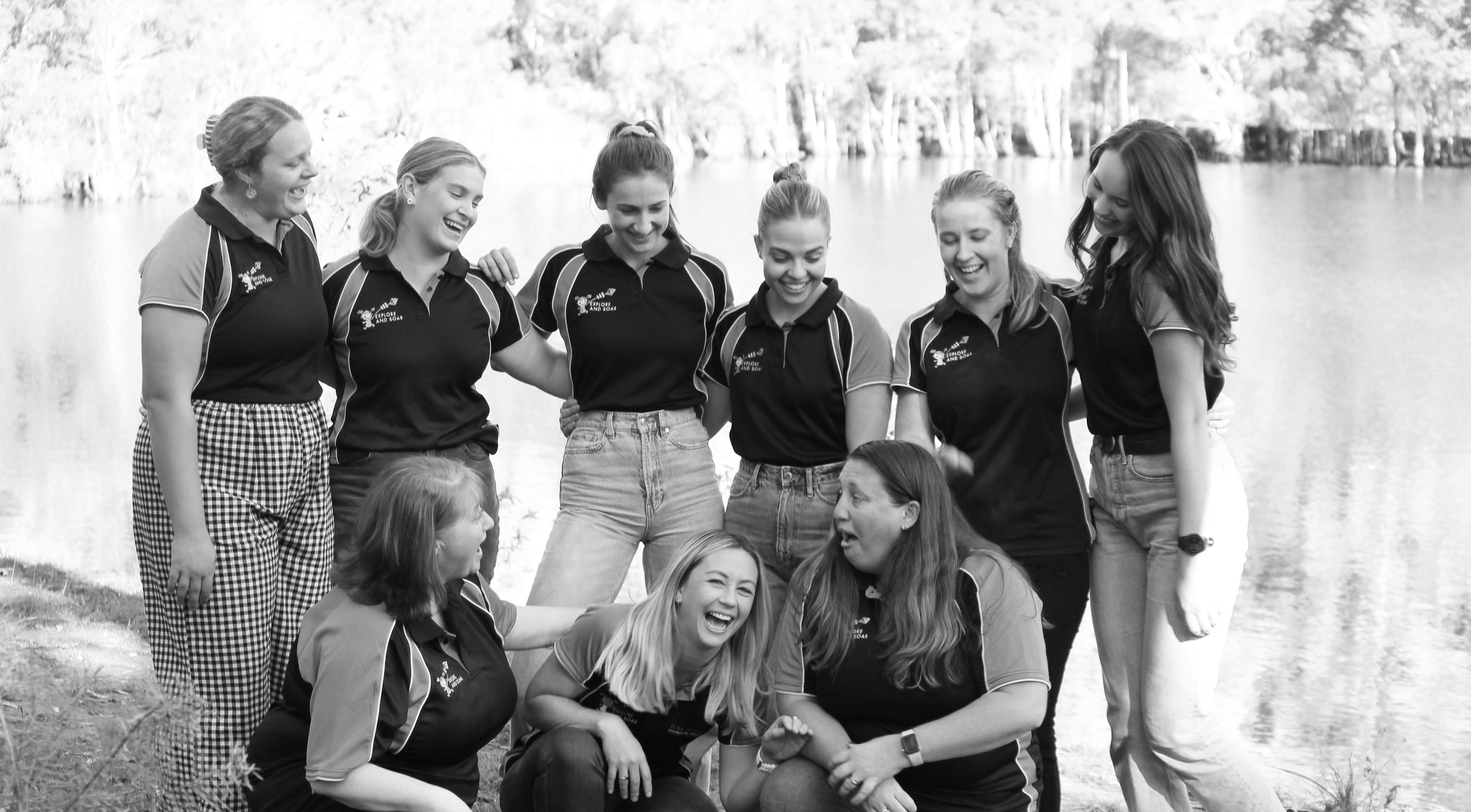
The Explore and Soar team love working together in our regular meetings. I always encourage creativity and the freedom to express ideas, recommendations and thoughts with one another. Often our greatest ideas stem from our team catch ups. We spend the time bouncing off one another’s energy, brainstorming and providing support or encouragement when needed. As we are a mobile business, it’s vital for us to put aside the time regularly to maintain a positive and productive team culture.

Team culture at Explore and Soar revolves around building strength and unity together, where open communication and connection is paramount. Ensuring that these things remain a core focus, allows us to collectively feel empowered whilst working independently but also allows us to work efficiently and cohesively as a team. Without this integral core value, our quality of service, knowledge and connection with our clients and families would not be present. It is what sets us apart; our connection and relationships. 

Maintaining connection within our team is also encouraged through staff development and training days. These are vital for the continued development of knowledge, skills and support. We also share time together through staff retreats and team days where we can reconnect with each other in order to sustain our culture as a team. This has been paramount over the last few months as we have now doubled our team! To ensure our quality of service remains the same, we must maintain a cohesive work flow and communication. It’s important that we bring our best individual qualities together, placing value on our individual strengths, further allowing us to expand our knowledge as a team. 

Our connectedness as a team allows us to offer adaptive, creative and flexible support options to our clients. In addition, our ability to build relationships and connections with your whole family, whilst collaborating with other services, means that we are able to attain the best results for your unique and desired goals.

As we are a mobile business, our way of connecting can sometimes be different within our own team. That’s why it’s so important for us to maintain our regular coffee debriefs, training days and phone calls in amongst our busy schedules. We offer each other support and advice throughout our weeks and sessions with clients – ensuring that the whole team is there to support our communities and one another.

As we finish one year and get ready to step forward into another, we are truly excited to be expanding our team further in order to support our families. We plan to end the year on a positive note, with excitement for the future and by continuing to offer the highest level of support to our clients. 

Keep an eye out on our socials for some new team members in the coming weeks! We look forward to introducing some new faces to you all!

Until next time,
Jess

ORIGINALLY PUBLISHED NOVEMBER 4, 2020

Latest Posts

  • A Year of Community for Wellbeing and End of Year Celebrations
  • School Readiness Transitioning to Kindergarten
  • Occupational Therapy in Action for Wellbeing
  • Balanced Bodies for Connected Communities
  • How Self-Care Skills Foster You and Your Community Connections

Multidisciplinary Approach

exploreandsoar · 16 January 2024 · Leave a Comment

MULTIDISCIPLINARY APPROACH

Building a multidisciplinary team involves a range of professionals from different disciplines, working in harmony to provide care. 

At Explore and Soar, a multidisciplinary approach is about building a strong team around our families, in order to provide high quality, best evidence intervention, coaching and strategies to reach the desired outcomes of each individual and family. 

This process can be somewhat overwhelming but incredibly powerful and rewarding.  

So let’s start by talking about the definition of multidisciplinary care, in order to give you a little more detail on what’s involved.

The following definition outlines the objectives as well as some of the challenges involved in the provision of multidisciplinary team care:

Multidisciplinary care – when professionals from a range of disciplines work together to deliver comprehensive care that addresses as many of the patient’s needs as possible. This can be delivered by a range of professionals functioning as a team under one organisational umbrella or by professionals from a range of organisations, including private practice, brought together as a unique team. As a patient’s condition changes over time, the composition of the team may change to reflect the changing clinical and psychosocial needs of the patient.

Mitchell G.K., Tieman, J.J., and Shelby-James T.M. (2008), Multidisciplinary care planning and teamwork in primary care, Medical Journal of Australia, Vol. 188, No. 8, p.S63.

So now that we know what it involves, how do you find the right team?

Trying to navigate the world of health professionals and creating a seamless connection between each discipline can become somewhat arduous. Deciding on the right individuals that best suit your family and that work well together as a team can take years to build. Having a strong connection and trust with each member of your team is essential. 

It’s important to remember that nothing worth having, ever comes easily. Building the right team can take time and may mean that you will be seeing multiple different professionals until you find the right ones for you. 

But here is the key to successfully building a great multidisciplinary team – it all starts with just one connection and finding that first perfect fit.

Whether you are just starting your journey in the allied health world or you have been working with different professionals for years, exercise patience and keep searching for that first perfect fit. Once you find one professional that you trust, everything will change for the better. This will have a flow on effect with the rest of the required team members. Often if you find a great fit with your OT, they can then recommend a wonderful speech pathologist or physiotherapist that would be the best fit for your family. 

Personally, I too am building my own allied health team after my recent accident.

A team that I can trust, connect to and one that fits seamlessly with my values and goals. One that will support me as I continue to embark on my journey back to full health. In doing so, I have learnt the complexities behind my own injuries, long term implications and affects I will be working through and on, for the years to come. My own team is now quickly building around me in order to personally help me through these challenges, and this is what I hope and wish for you. A strong team to build you up, to inform, educate and support you in the decisions you make for you, your child and your family. 

Professionally speaking, working as a part of a multidisciplinary team brings me so much joy! I have been working alongside some fabulous and highly qualified clinicians for the last decade and have witnessed the benefits of multiple disciplines coming together first hand. 

As occupational therapists we work closely with a range of allied health professionals; speech pathologists, physiotherapists, psychologists and chiropractors, just to name a few. The real power of collaboration lies in open communication and the transference of strategies across our therapy intervention sessions. 

Our love for working within multidisciplinary teams to build support around our clients, families and communities continues to be one of our greatest strengths and passions at Explore and Soar. We are always looking at exploring the best ways to support our families. 

At Explore and Soar we are always listening to the needs of our clients. We pride ourselves on being able to assist you in building a high quality allied health team that achieves your desired goals. So please never hesitate to reach out and ask us any questions that you may have! We want nothing but the best for you, your child and your family – and we won’t stop until that is delivered with a team that you trust.

Over the next month you will see some posts on our social media detailing how occupational therapists work with other allied health professionals to achieve our clients goals. Follow us on Instagram or Facebook (links below) and learn about the ways in which a multidisciplinary team can work together to achieve your goals. 

Until next time,
Jess

ORIGINALLY PUBLISHED SEPTEMBER 2, 2020

Latest Posts

  • A Year of Community for Wellbeing and End of Year Celebrations
  • School Readiness Transitioning to Kindergarten
  • Occupational Therapy in Action for Wellbeing
  • Balanced Bodies for Connected Communities
  • How Self-Care Skills Foster You and Your Community Connections

The Role of the Therapeutic Assistant

exploreandsoar · 16 January 2024 · Leave a Comment

THE ROLE OF THE THERAPEUTIC ASSISTANT

It’s been an intense start to the back end of the year for the Explore and Soar Team and I. After breaking my jaw in multiple places during an accident on 2 July, I was forced to take some much needed downtime. I had my accident on the last day of clinical treatment for term 2! Timing is everything, isn’t it? Sometimes you are quite literally made to slow down. But not to worry, I’m on the mend now. In the meantime, the Explore and Soar team went on a well-deserved break for 2 weeks during the school holidays and we are now so excited to be starting term 3 feeling refreshed! 

We have been cultivating some positive changes at Explore and Soar over recent months, that we are now very excited to be sharing with you. 

Since June, the development of our therapeutic assistant program has been underway. We have now welcomed 3 new TA staff members; Kirrily, Steph and Kate. We have spent the last month training and educating our new team members on certain tasks and activities, supporting them in understanding the culture of our team, our communities and most importantly beginning to meet our families.

So why have we expanded our team with Therapeutic Assistants and what do they do?

The role of a Therapeutic Assistant is just as vital and important as an Occupational Therapist. Their ability to strengthen, increase repetition and exposure to activities consistently, helps build upon achieving a child’s goals at a rate or intensity that is much greater than working with an OT alone. An OT doesn’t always have the extra time to share with a child to further develop their skills at a faster rate, leading to time and availability limitations. This is where our assistants step in! 

Having therapeutic assistants on hand also allows our families to experience a range of different service delivery options and support in all our local communities, which ensures continuity in care. Our therapeutic assistants will be working alongside our OT’s completing 1:1 TA sessions, group sessions and peer sessions. This service allows for consistency and compliments the home programs designed for our children and their families.

So how do occupational therapists and therapeutic assistants work together?

It is important to note that therapeutic assistants are not allowed to make any clinical judgements, decisions or alter any clinical activities unless they have been directed by their leading occupational therapist. This highlights the communication and continued liaison with the child’s treating occupational therapist. The role of your treating occupational therapist is to assess, evaluate and make all clinical decisions in regards to your child and family. They are the one who completes clinical observations and assessments within a range of environments, including home, school and the community. They complete all the report writing that requires clinical reasoning content and are the creators of your weekly session plans and home programming strategies, in order to match your short and long term goals. 

For us OT’s, our skills rely on modifying, grading and providing clinical adjustments to your daily living habits, productivity, self-care and passions to achieve success. However, as most of you are aware, learning and ascertaining these skills will not happen overnight. Therefore, for best evidence and achievement of these goals, repetition is absolutely key! And this is where our therapeutic assistants step in to accelerate and further facilitate the process. 

We are thrilled to welcome some extra helping hands at Explore and Soar! We continually strive to be a highly motivated, energised team who look forward to making a difference and becoming an integral part of our communities. We know that having therapeutic assistants working with our families will only help to expand our service offerings and community outreach.

So keep a look out for our new therapeutic assistants and don’t be afraid to say “Hi”. They are so excited to be working with us! You will be able to learn more about them on our website and socials over the coming month. 

Until next time,
Jess

ORIGINALLY POSTED AUGUST 5, 2020

Latest Posts

  • A Year of Community for Wellbeing and End of Year Celebrations
  • School Readiness Transitioning to Kindergarten
  • Occupational Therapy in Action for Wellbeing
  • Balanced Bodies for Connected Communities
  • How Self-Care Skills Foster You and Your Community Connections
  • « Go to Previous Page
  • Page 1
  • Interim pages omitted …
  • Page 8
  • Page 9
  • Page 10

Subscribe to our newsletter

Receive our news and updates via email. That's all.

View our Terms of Use.

Your feedback is always valued at Explore & Soar. If you have some feedback to help us support your needs better, please click here and share your valued feedback with us today.

STAY CONNECTED

  • mobile
  • mail
  • facebook
  • instagram

Explore and Soar

Explore and Soar © 2025 · Site by Design et Cetera

Explore and SoarLogo Header Menu
  • Home
  • Services
  • Model of Therapy
  • Job Opportunities
    • Paediatric OT
    • Mental Health OT
    • New Graduates
    • OT Student Placements
    • Allied Health Assistants
    • Client Support Roles
    • Job Opportunities Enquiry Form
  • News
    • Blog
    • Newsletters
  • About
  • Contact
    • General Enquiry Form
    • New Client Waitlist Enquiry
    • Parent FAQs
    • NDIS FAQs
    • Career FAQs