
• Skip to primary navigation
  • Skip to main content
Menu
  • Services
  • Model of Therapy
  • Job Opportunities
    • Paediatric OT
    • Mental Health OT
    • New Graduates
    • OT Student Placements
    • Allied Health Assistants
    • Client Support Roles
    • Job Opportunities Enquiry Form
EXPLORE & SOAR new Logo FC RGB 600px
Menu
  • News
    • Blog
    • Newsletters
  • About
  • Contact
    • Parent FAQs
    • NDIS FAQs
    • Career FAQs
    • General Enquiry Form
    • New Client Waitlist Enquiry

exploreandsoar

Gross Motor Skills – Muscle Tone

exploreandsoar · 17 January 2024 · Leave a Comment

GROSS MOTOR SKILLS
– MUSCLE TONE

This month we are going to break down a term that you might have heard your therapist mention to you when discussing your child’s gross and fine motor skills – and that is muscle tone!

Muscle tone is a key contributor that impacts everything that we do with our bodies in everyday life. This can include things like playing with our friends, sitting in the classroom, sitting at the table to eat dinner, or completing our homework. If a child is experiencing poor muscle tone, this can lead to challenges with gross motor, fine motor and coordination skills. 

So, what is Muscle Tone? 

By definition, muscle tone refers to the amount of tension, or the amount of resistance to movement, held in the muscles in our body. This tension or muscle tone helps us to hold our bodies in a stable upright position when sitting or standing. Changes in this tension or muscle tone then enable us to maintain control and stability over our bodies as we move and engage in a variety of activities. 

Postural control and muscle tone are essential for all motor skills. Sitting at a desk requires good postural control and so does sitting on the carpet. Without it, a child would likely start leaning into their peers. Other skills such as using a pencil or a computer also require good postural control. Playtime and PE are also much more difficult without good balance and postural control.

So, how does it work?

Muscle tone begins to develop when a child is very young. It is developed through activation and exploration of the vestibular sensory system. The vestibular system is stored in our ears. It consists of three semicircular canals filled with fluid. When we move our head forwards, backwards or side to side, this fluid moves inside these canals, telling our brain which direction and how fast our body is moving. This information then lets our brain know that we need to activate our muscle tone and where to hold or change the tension to keep our body stable and in control as we move. 

An example ofoptimal muscle tone activation that supports a daily activity is a child seated at their desk, leaning forward to write down the stimulus seen on a whiteboard. As they lean forward, their vestibular system is alerted that they are moving their head. This message then tells their brain that the body needs to activate tension to hold the core of the body stable in the seat while changing the tension in the neck to allow the head to scan up to the whiteboard and back down to the workbook on the desk in a controlled manner. The child’s body now remains stable while they use their fine motor skills in a controlled manner to write down the stimulus. 

The different types of Muscle…

We have two different categories of muscles within our body, tonic and phasic muscles. Tonic muscles are our inner postural muscles that are in charge of keeping us stable and upright against gravity. These muscles are longer lasting and are responsible for holding our body stable throughout the day to engage in daily living activities. Phasic muscles are our fast-firing and on-demand outer muscles that activate when we need a quick burst of movement or an action to be performed, but then they quickly fatigue. 

When our tonic muscles are unable to perform their tasks adequately, the phasic muscles act as substitutes. However, because the phasic muscles are responsible for mobility and skill, they are far less effective in maintaining posture. For example, a child who does not have well developed tonic muscle tone may compensate for this by using their shoulders and arms to stabilise themselves whilst seated at the classroom table, rather than using their back and core muscles. This results in increased fatigue for that child as the muscles they are compensating with tire quickly and are not designed for sustained use. It then also impacts their capacity to complete fine motor activities as they are using the muscles necessary for these skilled tasks to simply stabilise their body, rather than complete the academic activity in front of them.

So, what happens if Muscle Tone is not optimal? 

Muscle tone is a continuum. We all have different levels of muscle tone throughout our bodies. This variation is fine, as long as our body holds sufficient muscle tone to engage in the activities that we want and need to be able to perform on a daily basis. This differs however for children. For those who are having trouble engaging in everyday activities, it is important to consider that it may be muscle tone that is impacting their capacity to learn or perform.

Low tone:

Children who are experiencing low muscle tone may seem flacid or floppy when moving their bodies, have poor posture or stand/sit in a slouched position, have increased flexibility in their joints, have low endurance, lack body awareness and prefer sedentary activities. Think about those children who prefer to flop on to the couch, slump when seated, lean against objects when seated or standing to support themselves, be heavy footed, or appear uncoordinated or clumsy.

For these children, they require a high intensity of vestibular (movement) input to alert their brain and activate their muscle tone and body to engage optimally in activities. 

For our children who are experiencing low muscle tone, they fatigue quicker and easier than their peers. They also have to work harder to keep up with their peers and find compensatory ways to engage successfully in these activities. 

High tone:

This refers to children who appear to have six-packs and other visible external muscles (biceps, quadriceps, etc.). This is a result of them over-using their phasic (outer) muscles to compensate for their weaker inner core muscles when engaging in activities. 

Children with high muscle tone usually move very fast and often seem uncontrolled moving through activities, before their muscles reach fatigue. 

So how do we support our children to better activate and strengthen their muscle tone in order to participate in daily activities?

To further support our therapists and your child in achieving their goals – here is a list of activities that you can incorporate into your child’s daily routine within the home: 

  • Animal walks – including crab walks, bear walks, frogs walks, bunny hops and donkey kicks. These exercises activate a range of different muscles and assist in increasing muscle and postural tone.
  • Wheelbarrow walks – hold your child at their hips or knees whilst they walks on their hands. Motivate your child by encouraging them to go further each time. Vary the activity by making them walk around different obstacles or place a favourite toy on their back to balance / carry.
  • Bouncing on the trampoline – Vary the bounce to keep it interesting. Try star jumps, scissor kicks, donkey kicks, bouncing down to their knees and up again, etc. 
  • Sports such as swimming, martial arts and gymnastics.
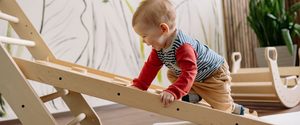
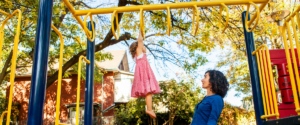
  • Climbing activities such as monkey bars, ladders, ropes, playground equipment.
  • Heavy work (movements that involve push/pull/carry against resistance). For example: lifting heavy objects (e.g. shopping bags or piles of books), carrying a heavy school bag, helping out in the garden or moving furniture around the house.
  • Bouncing or completing any exercises provided by your therapist on an exercise ball to activate core muscles.
  • Sit-ups or “bicycles” (lie on your back and cycle legs in the air).
  • “Fly like a bird” – get your child to lay on their tummy and arch their back whilst pulling straight arms and legs off the ground.
  • Warm up activities before seated tasks can help to temporarily increase muscle tone, so the child can feel what it is like to have better posture e.g. star jumps or animal walks.
  • Alternative seating and working positions i.e. lying on stomach propped up on elbows or working at a vertical surface e.g. whiteboard or blackboard, this helps to engage upper limb and core muscles.
  • Playing with playdoh or putty can be a great way to build tone in the hands, which can assist with handwriting and fine motor tasks
  • Using a spray bottle, pegs, screwing and unscrewing jars and squeezing a stress ball will help to work the fine muscles of the hands.

It is important to identify when a child tires and aim to gradually and continuously increase either the length of time or the amount of repetitions being completed. This will in turn increase the child’s strength and endurance. Scheduling in frequent rest breaks and providing lots of encouragement as well as varying the tasks will provide motivation and help increase the duration of activities. It’s important to remember that these activities are more successful when you’re making them fun! If you’d like more ideas or have questions about anything we’ve spoken about above, please don’t hesitate to reach out and ask your therapist for more information! 

Research:

Markham, C. (1987). Vestibular Control of Muscular Tone and Posture. Canadian Journal Of Neurological Sciences / Journal Canadien Des Sciences Neurologiques, 14(S3), 493-496. doi: 10.1017/s0317167100037975

Ganguly, J., Kulshreshtha, D., Almotiri, M., & Jog, M. (2021). Muscle Tone Physiology and Abnormalities. Toxins, 13(4), 282. https://doi.org/10.3390/toxins13040282

Kramer, P. (2018). Frames of Reference for Pediatric Occupational Therapy (4th ed.). Lippincott Williams & Wilkins.

Until next time,
Georgia

ORIGINALLY PUBLISHED JUNE 1, 2022

Latest Posts

  • More Than Just Toilet Training
  • Strong Hands Through Play Building Confidence, One Squeeze at a Time
  • What’s Really Behind Your Child’s Gross Motor Skills?
  • The Juggle of Life: Getting Back to Basics
  • The Power of Relationships: Parent to Child Connection

Mindfulness for Parents and Carers

exploreandsoar · 17 January 2024 · Leave a Comment

MINDFULNESS FOR PARENTS AND CARERS

A new school term and managing busy schedules is never without its challenges. The new year means building and establishing new routines that will work with your families core priorities, needs and wants whether it’s work, school, sports, social or education centred. At times this can feel like an uphill battle. Please know you are not alone in this. We see you, we hear you and we acknowledge all the effort and work you have put into the start of this year. The flexibility, patience and even changes parents have made for their children’s appointments is amazing to see. 

As Occupational Therapists and Therapy Assistants, we visit your home to provide intervention solutions to support your child’s release of emotions and to promote emotional regulation, social awareness, sensory processing and overall well being. 

Our parents work incredibly hard to maintain routines, be present and continue to support ongoing therapy within the home. But what I’d like to reflect on today are some coping strategies for our parents. To offer some suggestions that allow you a moment to ground yourself and recharge.

Most of us struggle to prioritise time for ourselves but it is essential for our wellbeing to take a few minutes each day to increase and support a positive mind-body balance. The way in which we can achieve this is through mindfulness practice. 

Mindfulness has several key characteristics:

Mindfulness is defined as a state of being in which individuals bring their attention to experiences occurring in the present moment, in a non-judgemental or accepting way. 

  1. It involves a receptive awareness and registration of inner experiences (emotions, thoughts, behavioural intentions) as well as external events. 
  2. Mindful information processing is pre-conceptual. Meaning, in a mindful state, individuals are purely noticing what is happening rather than evaluating, analysing, judging or reflecting upon it. 
  3. Mindfulness is also characterised by a present-oriented consciousness where individuals focus on moment-to-moment experiences rather than thinking about the past or fantasising about the future. 

There are many benefits to mindfulness that include:

  • Stress reduction 
  • Increasing working memory 
  • Increase focus 
  • Reduced  emotional reactivity 
  • Increased cognitive flexibility 
  • Enhance self awareness 
  • Increase intuition 
  • Reduce fear modulation

This also supports the notion that mindfulness training addresses a basic skill in self regulation capacities. This is a vital skill as a parent who is often providing an example of healthy emotional regulation to their children.

In order to become more mindful, I thought I’d give you some specific strategies that you can try. These include: 

  • Setting intentions or positive affirmations each morning.
  • Keeping a gratitude journal. Think of all that you are grateful for in the present moment, this can make difficult periods of time easier.
  • Grounding your body by stepping outside for 5 minutes with bare feet. You can also practice grounding yourself by paying attention to the soles of your feet as you walk. With each step notice how your weight shifts from the center to the ball of your foot. Maintain steady breathing throughout this exercise. This is called “earthing”. 
  • While the kids are asleep or busy being kids, find a place where you can be alone and savor the silence just for a moment. 
  • Square breathing. Inhale, hold, exhale, hold with a count of 4 at each stage. This type of breathing supports deeper and slower breath. It works by distracting your mind as you count to four, calming your nervous system, and decreasing stress in your body
  • Colouring in is a way to focus your thoughts, focus on the current moment and decompress. 
  • Completing 5 senses work. Notice the world around you, via sound, sight, touch, taste, and smell. By doing this, you are grounding yourself by increasing your awareness of your body and your environment. 
  • Completing a body scan. Sit or lie down in a comfortable position. Close your eyes to reduce the number of stimuli. Start at the top of your head and work all the way down to your feet. Pay close attention to what each area of the body feels like, giving yourself increased awareness and bringing your focus to your own body and what it needs. 

It’s vital that we take time out to be mindful each day. Looking after your wellbeing only affects your child’s in significantly positive ways. We want each of our parents and carers to know that we are here to support you as well as your children – as we are always family focused. For any more information please don’t hesitate to ask your therapists or assistant any time!

References 

Davis, L. W., Strasburger, A. M., & Brown, L. F. (2007). Mindfulness. An intervention for anxiety in schizophrenia. J Psychosoc Nurs, 45, 23-29.

Hülsheger, U. R., Alberts, H. J., Feinholdt, A., & Lang, J. W. (2013). Benefits of mindfulness at work: the role of mindfulness in emotion regulation, emotional exhaustion, and job satisfaction. Journal of applied psychology, 98(2), 310.

Until next time,
Maddie

ORIGINALLY PUBLISHED MAY 4, 2022

Latest Posts

  • More Than Just Toilet Training
  • Strong Hands Through Play Building Confidence, One Squeeze at a Time
  • What’s Really Behind Your Child’s Gross Motor Skills?
  • The Juggle of Life: Getting Back to Basics
  • The Power of Relationships: Parent to Child Connection

Social Skill Development & Community

exploreandsoar · 17 January 2024 · Leave a Comment

SOCIAL SKILL DEVELOPMENT & COMMUNITY

Last month we spoke about enhancing our understanding and development of safety and connection between the caregiver and a child. In the time that’s passed since our last blog,  so much has happened at Explore and Soar and with our families! With school and extracurricular activities, celebrations, catch ups and holidays all occurring over the last 6 weeks, as well as the constant uncertainty of Covid, we have been forging a path towards a new normal.

I have often thought about how exhausting assimilating into a ‘normal’ social life is for me, my team and our families. We have gone from months of being stuck in our own homes, to all of a sudden being out and about all the time. It has been exciting to reconnect with our friends, family and community in ways we did pre-pandemic, yet such a change does come with a few consequences. 

Notably, our children are exhausted! 

They simply haven’t had this much social stimulation in a long time. They have been out on weekends and are now experiencing their first proper end of term fatigue. And let’s be honest, as parents, we too are exhausted and needing some down time. 

As much as I want to discuss social skills and interaction in this month’s blog, I’d like to focus on finding the balance between socialising and creating the time for rest and integration (processing) time. 

Socially, developing these skills occur at the commencement of regulation and engagement (please refer to our previous posts), but social skills are dependent on a child’s ability to process sensory information internally and externally (from the world around them). This is completed through sound (middle ear), movement (vestibular system found within the ear), and the visual system (eyes), in conjunction with other systems in the body. Additionally these organs and sensory systems are all connected through cranial (head) nerves. When we are processing information, our sensory systems alert and motivate our body to carry this information through our nerves. Our cranial nerves are located on the face and in the brain, which allows us as young children to begin understanding non-verbal social cues. There are a lot of nerves that are connected to the mouth and eyes, from our ears, which when working together, create facial expressions and we then in turn use words to express ourselves, allowing us to socially interact with others using both non-verbal and verbal communications. 

If our children have challenges processing sound, visually tracking or moving their body, just their emotional regulation and social skill development can be impacted. Unfortunately children can’t always tell us what is going on inside their body with the use of words, but they can tell us with their behaviour. 

So let’s take 5 minutes to reflect on how your children have been over the last month. Ask yourself these questions:

How do they look? How are they feeling? Are they regulating through their emotions? Are they coping at school? How fatigued are they? When you are communicating and connecting with your children, are they seeing your facial expressions? Are they able to read your social cues in order to pick up on what comes next? 

If the answer to any of these questions is no, then please take some time to work on safety and connection with them. Support their regulation, calm their bodies and nervous systems. Pausing and giving time for their bodies to rest is optimal integration time to support gains in all development but also supports them in understanding demands socially through their sensory systems. 

So many of our children are easily overwhelmed by sounds, visual input, touch and movement. When they are not able to process these inputs optimally, it can greatly impact how they socially connect with you, as parents, their siblings, and additionally how they cope in the school and community environments, when connecting with their friends.

Which brings me to socialisation in schools. Is your child having difficulties socialising with their friends at school, is it becoming more of a problem now than in previous years? And how can you help your children more?

Please reach out and chat to us if you are worried about this! Each of your clinicians will have an understanding of your child’s needs and when we are working with them, we are developing their foundational skills to further support their social skills, or additionally we are specifically working on skills that can further expand their capacity to interact with peers.

Some strategies we work towards developing are:

  • Understanding their feelings.
  • Understanding others feelings through body language and facial expressions, such as happy face, surprised face, frustration or sadness.
  • Understanding whole body listening concepts and active listening when interacting with friends or a group of friends.
  • Developing group plans, negotiating and turn taking within these activities.
  • Expected, unexpected and flexible thinking when working with friends. 

At home there are things you can do to further expand your children’s social skills, such as:

  • Understanding which emotions your children feel or express to you. How many are there? (remember this will differ pending age and their self-regulation skills). 
  • Can they ask you what is wrong if your mood or facial expressions change?
  • Playing silly faces, can they guess emotions from facial expressions, such as sad, excited, surprised?
  • Play a game together that you all contribute to, each having an idea and adding everyone’s ideas together, to form a group plan and play as a family. 
  • Play boardgames that are chance related to expand on regulating through waiting their turn, winning and losing, as well as supporting each other as a whole family. 

As we are socially interacting with others in the community, school and different events, in order to further support your child’s tolerance in busy environments or supporting their reintegration into the community, you need to take notice of fatigue. Please consider different strategies that can support you and your children re-entering into the social world such as:

  • Reducing sounds, visual input and high energy movement to help them process the world around them.
  • Provide some visuals and plan for the day to support their understanding of routine and expectations.
  • When the days are not as busy, take your time or allow for transition times between activities.
  • Provide moments of deep pressure hugs, fetal positioning, ice chips, inversion activities, respiration or squishes to support their regulation and calming of the sensory system for increased engagement and interaction with peers.
  • Reduce time spent in the community or at events to support a transition back into the community and increase tolerance of high sensory inputs over an extended period of time.  

Allowing and providing our children with the best support in order to allow their sensory systems to engage socially and be present with others is paramount. It is vital in the current environment due to the reduction in time spent socialising during the last 24 months. Be kind to yourselves and to your kids, you have permission to take it slow. You do not need to say yes to everything! Think about what is best for you and your family, and focus on that!

We hope to continue seeing all of you venturing out into the communities, reconnecting with friends and expanding upon our children’s social skills. If you think we can further help you with these skills and expand on our support offerings, please don’t hesitate to contact me or your treating clinician.

Until next time,
Jess

ORIGINALLY PUBLISHED APRIL 13, 2022

Latest Posts

  • More Than Just Toilet Training
  • Strong Hands Through Play Building Confidence, One Squeeze at a Time
  • What’s Really Behind Your Child’s Gross Motor Skills?
  • The Juggle of Life: Getting Back to Basics
  • The Power of Relationships: Parent to Child Connection

Safety and Connection

exploreandsoar · 17 January 2024 · Leave a Comment

SAFETY AND CONNECTION

As we continue to break down and share with you the way Explore and Soar supports our clients and families in our year of ‘self-awareness and growth’, it’s only fitting that after having dived into our continuity support plans and parent coaching strategies, we address the topic of ‘safety and connection’ with you. 

Upon reflection and after reviewing a large amount of continued professional development over the years as a practitioner, one valuable skill set remains a constant. This integral part of development is always discussed at the beginning of each theory or model for paediatrics. It is the ultimate foundational skill required for us as human beings in order to begin our journey of  overall development; from infant > toddler > child > preteen > teenager > adult. 

These skills are safety and connection. 

The premise being, no developmental milestone or emotional and social skills can be obtained optimally without the foundations of safety & connection. 

Establishing a sense of safety and security is essential to all stages of development, with connection following this. 

As occupational therapists when working with our clients and families, we begin by establishing what safety looks like for each family, in order to use our therapeutic practices in the most efficient and successful manner. Before any goals can be targeted or reached, it is essential for a sense of safety and security to be built between our client and their therapist. 

As a therapist when working with families, to be able to identify their strengths, boundaries and what makes them feel most secure allows for adaptive intervention methods. When this occurs, there is a natural sense of relief and sense of calm that is not only beneficial for our parents and caregivers but with our children as well. If there is no sense of safety between the clinician and parent/caregiver, then the safety the child will feel with the therapist can be altered, impacting all therapy intervention and a child’s ability to achieve their desired goals and skills in regards to development. 

Safety and connection work simultaneously. 

Connection is a feeling. It is often described as the way in which someone unconsciously connects to another’s energy and then interacts with your own. Think about when you meet someone for the first time. With some people there is a sense of calm and connection straight away, like you have known them your whole life. But then others can also have the opposite effect, with a great sense of disconnection. These feelings are our internal navigation system that helps determine whether we are feeling safe and connected or whether there is a potential threat to our sense of safety. Acknowledging these feelings then allows us to make a choice on how to respond. 

Personally, many of my decisions as an adult, especially in work have been navigated by my sense of safety and connection. I wanted to provide the support that I didn’t have growing up in a small rural town. I want to provide the knowledge, research and intervention strategies that I have learned over my lifetime to families in order to enhance their sense of safety and connection, especially in our remote areas that lack greater levels of support. At the heart of my why is relationships. And establishing Explore and Soar as a safe and connected space for our families is paramount. 

Ensuring that your children feel a consistent sense of safety and connection is what allows them to evolve and grow as a human.  

Connection is established from birth, however due to individual differences for each child, parent and/or caregiver we all have different ways of establishing these connections or different individual reasons as to why some of us may have difficulty establishing connections.  

Connection is the foundation to any relationship and is paramount for all of us as humans to feel connected. The bond between parent and child from birth is where this all begins. A model that we use within Explore and Soar is the DIR Model (Developmental Individual Differences Relationships-Based Model originally developed by Dr. Stanley Greenspan) which allows us to work on providing strategies, interventions through parent coaching and relationship approaches to help our parents and children obtain a healthy parent-child connection. 

We seek to support the development of these skills in order to allow your children to enhance their own skills through a model of “Shared Attention and Regulation” – being the foundational pillar. 

It has been extremely exciting for us to explore the recent research addressing more specific developmental skills in relation to connection. These skills contribute to the beginning of development and enhance the child’s relationships and connectedness to both parent and self, ultimately allowing for future emotional and social development to occur.

So how do we as humans actually establish connectedness? 

We establish this through;

  • Mutual gaze – visually connecting in face to face interactions for connection of shared emotions which is foundational and earlier than shared attention (joint attention), through games with parent and child (Rollins, De Froy, Campbell, & Hoffman, 2021). 
  • Unconscious mimicry (shared actions), is linked to movement and body synchrony, outlining the importance of rhythmicity with movement, mirroring body language to connect to others (Peper, Van Der Wal & Begeer, 2016).
  • Synchrony – shared social timing, known as timed relationships, some examples include predictable rhythms of mother for baby to connect with such as heart rate, respiration, reciprocity (tone) of voice, sleep/wake cycles and an ability to have an interactive and rhythmic flow of interaction to connect the parent and child’s emotional state to match (foundations of co-regulation and regulation) (Feldman, 2007). 

These established skills result in a parent child synchronicity and connectedness, reinforcing the sense of safety as outlined above and supporting overall emotional skill development.

I personally love working within this field because you can learn so many different models of support and expand your intervention approach and strategies for all children, as no child is ever the same. As I continue to work in this field, I have begun to see each model overlap and support one another.

Safety and connection is vital in building the foundations to co-regulation and regulation. It greatly impacts social development which we will be discussing in greater detail next month.

Articles

Geller, S. (2018). Therapeutic Presence and Polyvagal Theory: Principles and Practices for Cultivating Effective Therapeutic Relationships. From Porges and Dana (2018) Clinical Applications of the Polyvagal Theory: The Emergence of Polyvagal-Informed Therapies. New York: WW Norton 

Feldman, R. (2007). Parent–infant synchrony and the construction of shared timing; physiological precursors, developmental outcomes, and risk conditions. Journal of Child psychology and Psychiatry, 48(3-4), 329-354. 

Peper, C. L. E., van der Wal, S. J., & Begeer, S. (2016). Autism in action: reduced bodily connectedness during social interactions?. Frontiers in psychology, 7, 1862. 

Rollins, P. R., De Froy, A., Campbell, M., & Hoffman, R. T. (2021). Mutual gaze: An active ingredient for social development in toddlers with ASD: A randomized control trial. Journal of Autism and Developmental Disorders, 51(6), 1921-1938.

Until next time,
Jess

ORIGINALLY PUBLISHED MARCH 3, 2022

Latest Posts

  • More Than Just Toilet Training
  • Strong Hands Through Play Building Confidence, One Squeeze at a Time
  • What’s Really Behind Your Child’s Gross Motor Skills?
  • The Juggle of Life: Getting Back to Basics
  • The Power of Relationships: Parent to Child Connection

Parent Coaching & Support

exploreandsoar · 17 January 2024 · Leave a Comment

PARENT COACHING & SUPPORT

This year we are looking to work even closer with our families, by listening to the needs of not only our children but their parents and carers too. In 2022 we will be offering more parent coaching, providing support and guidance which is key in the intervention that supports the achievement of our goals. This supports the Explore and Soar theme 2022; self-awareness and growth. Our Explore and Soar team are working towards increasing and supporting our families as a whole. 

A strategy to support this is continuity support plans. These involve breaking down what you are hoping to achieve as a family for the year, our parents goals as well as our clients and how we plan to achieve this for the coming year. This further expands and enhances our intervention sessions with our families as a whole. We can review the plans at any time, especially if a circumstance has changed, allowing us to shift goals, intervention and strategies as needed. 

When I have spoken to families in recent weeks, there is a sense of pressure and parents becoming overwhelmed, especially in the current and unpredictable environment. Some of our families are seeing multiple allied health professionals, all providing home programs, activities and strategies to implement on a regular basis. This is great but can become very overwhelming when managing schedules and incorporating activities into everyday routines. When discussing continuity plans with our parents, asking how we can help and what they’d like to do next, the overall consensus is that they feel like they don’t know exactly what to do and when to implement each strategy.

Learning new tools and strategies is great but how do we manage our time? How do you know what to implement and when? How do you prioritise goals with your allied health professionals? We are consistently getting all of these questions. The most vital being how to manage home program strategies and activities amongst everyday life. Not to mention managing multiple children, different family dynamics and ongoing changes in our communities, impacting schooling, accessing sports, events or our ability to connect with others.

I see you! I hear you! It is challenging. 

We are all trying to get through each and everyday the best we can. We are here to help navigate the start of another year, navigate through the to-do list and support you in achieving your families goals when working alongside health professionals. 

As OT’s, a big part of our role is to support structure, organisation, prioritising, planning and goal setting. We love being able to do this for ourselves, but also for others. We are great at being able to zoom out and see your family as a whole and zoom in on the areas of concern. This allows us to remain family-centered but also clinically reason with what is best needed, implementing the tool or strategy that is most appropriate in that moment. 

Another skill that we have and use every session is active listening. The ability to actively listen, being attentive and noticing what is needed – even if you don’t see it as an immediate concern. We like to stay one or two steps ahead. Sometimes it will involve asking more specific questions to understand the situation in greater detail, in order to support you. This space to allow you to feel heard, empowered and to be able to work through what is happening in the moment, provides the support to keep going on the most challenging days. Celebrating the little wins with you and ensuring that you do not feel alone is exactly what we are here to do. 

Our greatest feedback at the end of last year was that you appreciated the continuation of services and support that you received during lockdowns. Knowing this, and with our values of community, connection and communication at the forefront, we will continue to be present, to show up and support you, not just for the needs of your children but you too as parents and carers.

We are looking forward to expanding our support in our local communities. As we are opening up conversations, listening to your goals and planning the next 3, 6 and 12 months, please ask us any questions and indicate your needs and wants. We want 2022 to be a year where feedback allows us to grow greater than ever before. 

We grow alongside you.

We are always tailoring intervention sessions, opportunities and education seminars based on what you and our communities are asking for. You matter, your feedback matters. Tell us what you would like to see from us this year, nothing is off the table. Would you like to be a part of parent support programs with other families? Would you like online educational seminars available each term for you to participate in and if so what topic interests you?

Let us know what you would like more support in. We are here to help.

We cannot wait to see what this year brings for us all.

Until next time,
Jess

ORIGINALLY PUBLISHED FEBRUARY 2, 2022

Latest Posts

  • More Than Just Toilet Training
  • Strong Hands Through Play Building Confidence, One Squeeze at a Time
  • What’s Really Behind Your Child’s Gross Motor Skills?
  • The Juggle of Life: Getting Back to Basics
  • The Power of Relationships: Parent to Child Connection
  • « Go to Previous Page
  • Page 1
  • Interim pages omitted …
  • Page 8
  • Page 9
  • Page 10
  • Page 11
  • Page 12
  • Interim pages omitted …
  • Page 14
  • Go to Next Page »

Subscribe to our newsletter

Receive our news and updates via email. That's all.

View our Terms of Use.

Your feedback is always valued at Explore & Soar. If you have some feedback to help us support your needs better, please click here and share your valued feedback with us today.

STAY CONNECTED

  • mobile
  • mail
  • facebook
  • instagram

Explore and Soar

Explore and Soar © 2026 · Site by Design et Cetera

Explore and SoarLogo Header Menu
  • Home
  • Services
  • Model of Therapy
  • Job Opportunities
    • Paediatric OT
    • Mental Health OT
    • New Graduates
    • OT Student Placements
    • Allied Health Assistants
    • Client Support Roles
    • Job Opportunities Enquiry Form
  • News
    • Blog
    • Newsletters
  • About
  • Contact
    • General Enquiry Form
    • New Client Waitlist Enquiry
    • Parent FAQs
    • NDIS FAQs
    • Career FAQs