• Skip to primary navigation
  • Skip to main content
Menu
  • Services
  • Model of Therapy
  • Job Opportunities
    • Paediatric OT
    • Mental Health OT
    • New Graduates
    • OT Student Placements
    • Allied Health Assistants
    • Client Support Roles
    • Job Opportunities Enquiry Form
EXPLORE & SOAR new Logo FC RGB 600px
Menu
  • News
    • Blog
    • Newsletters
  • About
  • Contact
    • Parent FAQs
    • NDIS FAQs
    • Career FAQs
    • General Enquiry Form
    • New Client Waitlist Enquiry

Children

Eyes on the Prize: The Power of Hand-Eye Coordination for Mastering Fine Motor Skills

exploreandsoar · 17 January 2024 · Leave a Comment

EYES ON THE PRIZE
– THE POWER OF HAND-EYE COORDINATION FOR MASTERING FINE MOTOR SKILLS

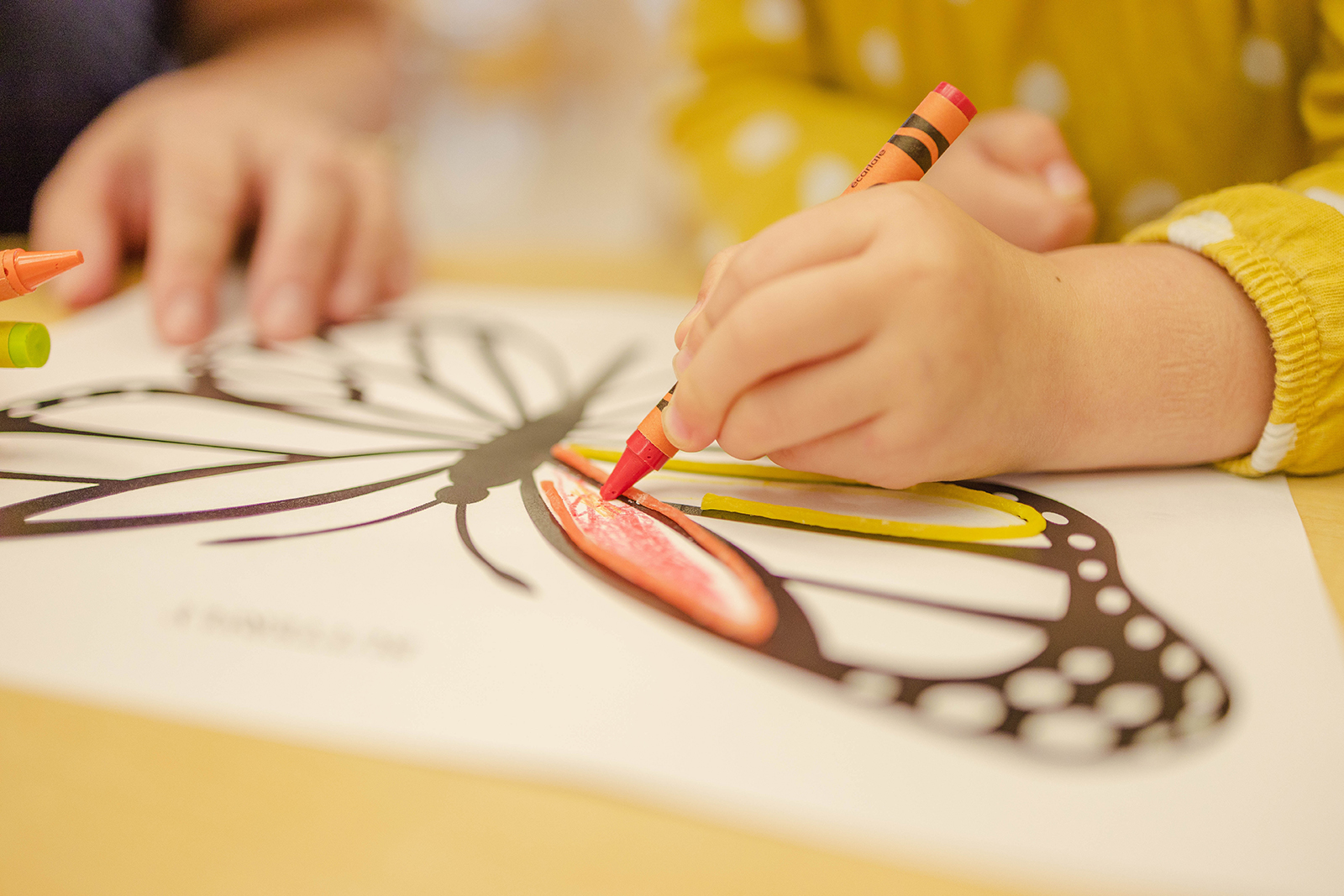
From playing catch to mastering the art of drawing, hand-eye coordination is the superhero skill that enables children to develop their fine motor skills with ease. 

Have you noticed the stage within a child’s life where their messy scribbles become somewhat legible pictures? Or that they catch a ball much easier? Or that they stack the block tower higher before it falls? 

All of these changes can be partly due to the development of fine motor skills, but also other skills such as hand-eye coordination. 

So, when children are referred to occupational therapy for fine motor skills, it is important we look not only at the strength of the hand but other factors that may influence fine motor development.

Hand-eye coordination refers to the ability of the hands and eyes to work together to perform a task. It involves the visual system, providing visual information to the brain about the location of objects and the movements required to interact with them, as well as the motor system, which executes the movements needed to manipulate objects. 

 Children who have poor hand-eye coordination may:

  • Struggle catching or throwing a ball.
  • Have difficulty writing or drawing, or be resistant to do such tasks.
  • Prefer to use their hand rather than using utensils.
  • Be clumsy or awkward in movement, such as bumping into objects or knocking things over frequently.
  • Have poor posture or balance.
  • Have difficulty with visual tracking, such as following moving objects or tracking a line of text while reading.
  • Not be able to do up their shoelaces or button up clothes like other children their age.

It’s common for children who struggle with sensory processing difficulties to experience difficulties with hand-eye coordination and, therefore, fine motor skills. For example, children with sensory processing difficulties may find seeing things with their eyes hard, such as where the pencil is on the page, or where the ball is in relation to the bat. Without this visual feedback, they can have challenges getting their body ready to move so that they can hit the ball or draw the wheels on the car. This is how hand-eye coordination can impact their ability to develop their fine motor skills.   

How can we work on Hand-Eye coordination?

Providing sensory-rich environments through activities such as playing with playdough, finger painting, lego, and puzzles can help children develop their sensory processing skills and improve their hand-eye coordination. We also look for opportunities for movement and physical activity, as this can help children learn where their body, arms and legs are so they can move or adjust their bodies to be ready for what is to come. Once we know where our body, arms and legs are, we then know where our wrists, hands and fingers are. Combining that with our eyes telling our body what is coming means we can coordinate our hands and eyes to complete the task in front of us.   

Some ways your child can develop hand-eye coordination at home:

  • Stringing beads or threading pasta
  • Throwing and catching a ball, balloon, or frisbee
  • Jigsaw puzzles
  • Drawing and colouring
  • Using scissors, cutting out and then pasting onto a page
  • Playing with blocks or Legos (We would love to see the creations made!)
  • Playing with Play-Doh
  • Play with Play-Doh: Use their hands to manipulate the dough while looking at what they are making

We hope you have found this blog informative; if you need a ‘hand’ with developing your child’s Hand-Eye Coordination, please call us today; we would love to chat about what we can do to support your child’s development. 

Looking forward to hearing from you soon. Contact us on 0477 708 217 or admin@exploreandsoar.com.au

 Until next time,
Molly

ORIGINALLY PUBLISHED JULY 5, 2023

Latest Posts

  • More Than Just Toilet Training
  • Strong Hands Through Play Building Confidence, One Squeeze at a Time
  • What’s Really Behind Your Child’s Gross Motor Skills?
  • The Juggle of Life: Getting Back to Basics
  • The Power of Relationships: Parent to Child Connection

The Core of It All!

exploreandsoar · 17 January 2024 · Leave a Comment

THE CORE OF IT ALL!

How often have you heard your OT talk about the importance of core strength in a session with your child? It is something that we definitely speak about a lot in sessions as it is foundational to so many different skills that we all develop over our lifetime. In one of our previous blogs, we looked at Gross Motor Skills  and how we work on these skills as OT’s. We talk about Gross Motor skills involving all those activities that use big muscle groups. One of those big muscle groups is our core – from the bottom of the rib cage to the pelvic floor; That is our core! 

Being such a large section of our body, our core muscles help us to move in every way. From twisting and turning to bending and standing up straight. Without a strong core, many different skills, such as our coordination and the use of fine motor skills, can be more challenging than they should be.

Kids who generally have a weak core may:

  •  “W” sit on the floor
  • Slump or hunch over when sitting on the floor or in a chair
  • Constantly move or change position when sitting in a chair
  • Hold their head in their hand when writing or colouring in
  • May struggle with small items such as coins or doing up buttons on shirts
  • Need to lean against a wall or furniture to put shoes on
  • Struggle to keep up with their friends running around or complain that things are “too hard.”

So, is my child working on a six pack?

No – that is not the overall goal of improving your child’s core strength! Our core is made up of not only our abdominal muscles but also some of our back muscles as well as muscles that connect our legs to our hips and body. We are looking at strengthening those deep muscles within our body. We want to get those muscles to work for longer before they become fatigued (endurance), to work with all the other muscles of the body and to react to what is happening around us to help maintain our balance and stay upright.

How do we work on core strength?

We use three main concepts:

  1. Make it fun
  2. Work the whole body
  3. A little every day is best

Some of the ways your child can develop core strength include:

  • Pretend to be an animal and walk like them – bears, frogs, crabs, and worms are great
  • Laying on your tummy to play card games
  • Kneeling on the floor or on uneven surfaces, such as a pillow
  • Scooter board races
  • Obstacle courses that you have to commando crawl through
  • Using a gym ball while in a plank position to toss a bean bag at a target 

If this sounds like your child, or you would like to know more about how you can work on Core Strength at home, we would love to chat with you about your child and their goals.

Looking forward to hearing from you soon. Contact us on 0477 708 217 or admin@exploreandsoar.com.au

Until next time,
Lori

ORIGINALLY PUBLISHED JUNE 7, 2023

Latest Posts

  • More Than Just Toilet Training
  • Strong Hands Through Play Building Confidence, One Squeeze at a Time
  • What’s Really Behind Your Child’s Gross Motor Skills?
  • The Juggle of Life: Getting Back to Basics
  • The Power of Relationships: Parent to Child Connection

Safety for Vulnerability

exploreandsoar · 17 January 2024 · Leave a Comment

SAFETY FOR VULNERABILITY

Happy New Year everyone! I hope everyone has had a magical Christmas and New Year with your family, friends and community. 

I know December was a busy time for a lot of people, navigating all the demands of the end of year. I hope there has been lots of resting, sharing quality time and making memories for you and your family, to set you up for another successful year ahead. I truly cannot wait to see you all continue to grow, share who you are with the world and shine.  

At the beginning of each year we reflect on the previous year’s theme and set intentions for the year to come. This year our intentions and the way you will see us show up within ourselves, our team and with you, our families and communities is Safety for Vulnerability. 

Why this theme?

How this came about is for the last few years we have had significant change, including life and world events; but also growth of the company, which has meant a lot of movement, adapting, changing and requiring to always be on. This year, it is about getting back to our core knowledge and foundations. 

It is about holding space for people to feel ‘Safe’ to allow for ‘Vulnerability’. When this happens, this is where the magic happens. 

The clinical side of it

From an OT perspective, there is a lot of research around the importance of feeling safe before beginning any work with any child, family member or community. 

When we feel safe, secure, and protected, we are comfortable to let our true self shine, to show people our true selves, including our quirks, strengths and limitations. This is where the true beauty is. Being able to share who you are unapologetically is the essence of what brings you joy in your everyday activities; it brings about wellbeing and enhances our confidence in everything we do. As OT’s this is part of our job – to facilitate and support all our children, parents and community members to achieve this. To create a feeling of safe, to allow you to be vulnerable and share who you are. 

This is where our point of difference at Explore and Soar is for our clients and families, because connection, relationships, establishing trust and safety are at the forefront and the beginning of everything we do. We take pride in these relationships with you all, because we know when we have this safety and connection, only then can we address and begin the real work.

Once we feel safe, we can be vulnerable 

We can share and express how we feel, and work through these feelings. It is these moments that we as part of your team, get to support you further and be there with you in those moments. It is where we can assist in identifying activities that are leading to such feelings where things feel like they are  unattainable or unachievable. 

This is where we grade these activities for success in learning that new skill and then, where appropriate share them with your people and community. 

So something that felt big and challenging is now an obstacle overcome and done so with everyone supporting you. 

Vulnerability also brings the need for flexibility

When we share our true selves – our emotions and feelings – we cannot be sure how people will react; its unpredictable. 

For our children, unpredictability is the opposite of what they need. It is the opposite of what they seek. They seek the predictable, to know the boundaries and limits and have control. However, ensuring strong connections and relationships allow our children the safety and securing within this unpredictability. 

It is here we can show our flexibility. It is here that we can still provide our children with the predictability they seek. Our ability to be flexible in our thoughts, plans and actions is teaching our children that skill also! It is breaking down a skill that seems big and challenging to our children in real time. 

Being flexible and dealing with change is something every one of us has to be at some point in our lives. 

So it is our commitment to our Explore and Soar families that we will show Safety in Vulnerability in 2023 – to develop our children’s flexibility and dealing with change.

Until next time,
Jess & Lori

ORIGINALLY PUBLISHED FEBRUARY 10, 2023

Latest Posts

  • More Than Just Toilet Training
  • Strong Hands Through Play Building Confidence, One Squeeze at a Time
  • What’s Really Behind Your Child’s Gross Motor Skills?
  • The Juggle of Life: Getting Back to Basics
  • The Power of Relationships: Parent to Child Connection

Transitions for Kindergarten

exploreandsoar · 17 January 2024 · Leave a Comment

TRANSITIONS FOR KINDERGARTEN

Transitions can be an exciting and nerve-racking time. Transitioning to Kindergarten being one of those times in our life. It is the moment where you are finishing an era in preschool and being home more with your family, to starting your 12 years of learning at school. It’s the start of one your biggest transitions.

We at Explore and Soar, have you. 

We hear you in the excitement as well as the nerves. We understand the range of emotions we all have with the closing and saying goodbye to a fun stage in our lives and opening the door to the next. We know exactly what to look out for and how to assist during these times. 

As OTs for our children, we look at all areas of development, such as sensory motor, emotional and social, attention/concentration, fine motor, gross motor, self-care, routines, motor planning, problem solving and play skills. We dive deep into all these areas, identify strengths, areas to work on and provide a range of strategies to support their development in preparation for the coming year. 

Some strategies for our children are:

Obstacle Courses: Inside and outside (weather and time dependent), being able to crawl, climb in, over, under, through all different items within the family home or backyard that brings about a fun playful adventure. Sometimes we play “pirates finding the treasure”, dinosaurs or “hidden treasures in the garden” – the world is your creation in play!

Arts & Craft: Christmas is such a fun time for all the craft ideas that our children are motivated to engage in. It’s great for using all different craft utensils and ways to make anything, from ripping paper, scrunching and gluing it on a Santa hat, cutting out a Christmas tree, painting (inside or outside), using a water bottle and paper towel to clean up wet chalk drawing on doors or chalk on the pavement. If you want to share your creations, we would love to see them all! 

Eating & Drinking: With all the end of year social events and New Year, practicing drinking from our school drink bottle, to open it, close it and refill it is vital. So is eating different snacks and food. When going out to all events over the break, take your school lunch box and package foods like you would they were attending school. Practice eating from this packaging to ensure they can open it. Who doesn’t love to eat?? 

If you’d like some ideas, our team have developed a Transition to School resource for you to reference and support you for some fun activities.

As OT’s for our parents, we look at how to best support you in this transition to provide the best for your children, this can come in many different ways and is not limited by any means. Some ways that we support is through parent coaching and education, presenting transition to school talks at our local communities schools as well as providing online education transition to school seminars with a Speech Pathologist. 

Some strategies for our parents are:

Self-regulation & Awareness: Being aware of your own emotions and ability to regulate them. It’s ok to feel nervous, uncertain and overwhelmed, but being able to individually work through these yourself will further support your child transition. What emotions you are feeling subconsciously, your child will be able to feel them too. 

Ask Questions: It is ok to ask questions! Talk to your teachers, chat with allied health professionals (OTs and speech pathologists) if you have any questions about development and/or being ready to transition to school. We can help, support and give guidance for where you need it.

Attend our FREE online School Readiness talk with ASPIRE Speech Pathology. 

Our Director Jess Rodgers and ASPIRE’s Director Andrea Cooper, team up each year to present all the must knows around Speech, Language & Overall Development as our children transition into Kindergarten. The online FREE event occurs at 7pm – 8pm Thursday 3rd November. Please join us as we love answering all your questions and sharing our knowledge with you all. 

Lastly but most importantly. Follow your gut! Our gut instincts are there for a reason, if you have any uncertainties or questions, my advice is also trust your gut and go with it. The uncertain feeling is there for a reason.  

School transitions are big, we want to ensure you are well prepared and have plenty of opportunities to reach out. If you would like more information each November, we write different pieces around school readiness. 

We hope these last few months of the year are exciting, fun and playful. We are looking forward to sharing with you our last blog of the year next month and begin sharing with you all, all the changes and transitions, Explore and Soar have been going through too. 

Until next time,
Jess

P.S. Last year Georgia wrote a lot of helpful tips about school readiness. Read here. 

ORIGINALLY PUBLISHED NOVEMBER 1, 2022

Latest Posts

  • More Than Just Toilet Training
  • Strong Hands Through Play Building Confidence, One Squeeze at a Time
  • What’s Really Behind Your Child’s Gross Motor Skills?
  • The Juggle of Life: Getting Back to Basics
  • The Power of Relationships: Parent to Child Connection

Gross Motor Skills – Muscle Tone

exploreandsoar · 17 January 2024 · Leave a Comment

GROSS MOTOR SKILLS
– MUSCLE TONE

This month we are going to break down a term that you might have heard your therapist mention to you when discussing your child’s gross and fine motor skills – and that is muscle tone!

Muscle tone is a key contributor that impacts everything that we do with our bodies in everyday life. This can include things like playing with our friends, sitting in the classroom, sitting at the table to eat dinner, or completing our homework. If a child is experiencing poor muscle tone, this can lead to challenges with gross motor, fine motor and coordination skills. 

So, what is Muscle Tone? 

By definition, muscle tone refers to the amount of tension, or the amount of resistance to movement, held in the muscles in our body. This tension or muscle tone helps us to hold our bodies in a stable upright position when sitting or standing. Changes in this tension or muscle tone then enable us to maintain control and stability over our bodies as we move and engage in a variety of activities. 

Postural control and muscle tone are essential for all motor skills. Sitting at a desk requires good postural control and so does sitting on the carpet. Without it, a child would likely start leaning into their peers. Other skills such as using a pencil or a computer also require good postural control. Playtime and PE are also much more difficult without good balance and postural control.

So, how does it work?

Muscle tone begins to develop when a child is very young. It is developed through activation and exploration of the vestibular sensory system. The vestibular system is stored in our ears. It consists of three semicircular canals filled with fluid. When we move our head forwards, backwards or side to side, this fluid moves inside these canals, telling our brain which direction and how fast our body is moving. This information then lets our brain know that we need to activate our muscle tone and where to hold or change the tension to keep our body stable and in control as we move. 

An example ofoptimal muscle tone activation that supports a daily activity is a child seated at their desk, leaning forward to write down the stimulus seen on a whiteboard. As they lean forward, their vestibular system is alerted that they are moving their head. This message then tells their brain that the body needs to activate tension to hold the core of the body stable in the seat while changing the tension in the neck to allow the head to scan up to the whiteboard and back down to the workbook on the desk in a controlled manner. The child’s body now remains stable while they use their fine motor skills in a controlled manner to write down the stimulus. 

The different types of Muscle…

We have two different categories of muscles within our body, tonic and phasic muscles. Tonic muscles are our inner postural muscles that are in charge of keeping us stable and upright against gravity. These muscles are longer lasting and are responsible for holding our body stable throughout the day to engage in daily living activities. Phasic muscles are our fast-firing and on-demand outer muscles that activate when we need a quick burst of movement or an action to be performed, but then they quickly fatigue. 

When our tonic muscles are unable to perform their tasks adequately, the phasic muscles act as substitutes. However, because the phasic muscles are responsible for mobility and skill, they are far less effective in maintaining posture. For example, a child who does not have well developed tonic muscle tone may compensate for this by using their shoulders and arms to stabilise themselves whilst seated at the classroom table, rather than using their back and core muscles. This results in increased fatigue for that child as the muscles they are compensating with tire quickly and are not designed for sustained use. It then also impacts their capacity to complete fine motor activities as they are using the muscles necessary for these skilled tasks to simply stabilise their body, rather than complete the academic activity in front of them.

So, what happens if Muscle Tone is not optimal? 

Muscle tone is a continuum. We all have different levels of muscle tone throughout our bodies. This variation is fine, as long as our body holds sufficient muscle tone to engage in the activities that we want and need to be able to perform on a daily basis. This differs however for children. For those who are having trouble engaging in everyday activities, it is important to consider that it may be muscle tone that is impacting their capacity to learn or perform.

Low tone:

Children who are experiencing low muscle tone may seem flacid or floppy when moving their bodies, have poor posture or stand/sit in a slouched position, have increased flexibility in their joints, have low endurance, lack body awareness and prefer sedentary activities. Think about those children who prefer to flop on to the couch, slump when seated, lean against objects when seated or standing to support themselves, be heavy footed, or appear uncoordinated or clumsy.

For these children, they require a high intensity of vestibular (movement) input to alert their brain and activate their muscle tone and body to engage optimally in activities. 

For our children who are experiencing low muscle tone, they fatigue quicker and easier than their peers. They also have to work harder to keep up with their peers and find compensatory ways to engage successfully in these activities. 

High tone:

This refers to children who appear to have six-packs and other visible external muscles (biceps, quadriceps, etc.). This is a result of them over-using their phasic (outer) muscles to compensate for their weaker inner core muscles when engaging in activities. 

Children with high muscle tone usually move very fast and often seem uncontrolled moving through activities, before their muscles reach fatigue. 

So how do we support our children to better activate and strengthen their muscle tone in order to participate in daily activities?

To further support our therapists and your child in achieving their goals – here is a list of activities that you can incorporate into your child’s daily routine within the home: 

  • Animal walks – including crab walks, bear walks, frogs walks, bunny hops and donkey kicks. These exercises activate a range of different muscles and assist in increasing muscle and postural tone.
  • Wheelbarrow walks – hold your child at their hips or knees whilst they walks on their hands. Motivate your child by encouraging them to go further each time. Vary the activity by making them walk around different obstacles or place a favourite toy on their back to balance / carry.
  • Bouncing on the trampoline – Vary the bounce to keep it interesting. Try star jumps, scissor kicks, donkey kicks, bouncing down to their knees and up again, etc. 
  • Sports such as swimming, martial arts and gymnastics.
  • Climbing activities such as monkey bars, ladders, ropes, playground equipment.
  • Heavy work (movements that involve push/pull/carry against resistance). For example: lifting heavy objects (e.g. shopping bags or piles of books), carrying a heavy school bag, helping out in the garden or moving furniture around the house.
  • Bouncing or completing any exercises provided by your therapist on an exercise ball to activate core muscles.
  • Sit-ups or “bicycles” (lie on your back and cycle legs in the air).
  • “Fly like a bird” – get your child to lay on their tummy and arch their back whilst pulling straight arms and legs off the ground.
  • Warm up activities before seated tasks can help to temporarily increase muscle tone, so the child can feel what it is like to have better posture e.g. star jumps or animal walks.
  • Alternative seating and working positions i.e. lying on stomach propped up on elbows or working at a vertical surface e.g. whiteboard or blackboard, this helps to engage upper limb and core muscles.
  • Playing with playdoh or putty can be a great way to build tone in the hands, which can assist with handwriting and fine motor tasks
  • Using a spray bottle, pegs, screwing and unscrewing jars and squeezing a stress ball will help to work the fine muscles of the hands.

It is important to identify when a child tires and aim to gradually and continuously increase either the length of time or the amount of repetitions being completed. This will in turn increase the child’s strength and endurance. Scheduling in frequent rest breaks and providing lots of encouragement as well as varying the tasks will provide motivation and help increase the duration of activities. It’s important to remember that these activities are more successful when you’re making them fun! If you’d like more ideas or have questions about anything we’ve spoken about above, please don’t hesitate to reach out and ask your therapist for more information! 

Research:

Markham, C. (1987). Vestibular Control of Muscular Tone and Posture. Canadian Journal Of Neurological Sciences / Journal Canadien Des Sciences Neurologiques, 14(S3), 493-496. doi: 10.1017/s0317167100037975

Ganguly, J., Kulshreshtha, D., Almotiri, M., & Jog, M. (2021). Muscle Tone Physiology and Abnormalities. Toxins, 13(4), 282. https://doi.org/10.3390/toxins13040282

Kramer, P. (2018). Frames of Reference for Pediatric Occupational Therapy (4th ed.). Lippincott Williams & Wilkins.

Until next time,
Georgia

ORIGINALLY PUBLISHED JUNE 1, 2022

Latest Posts

  • More Than Just Toilet Training
  • Strong Hands Through Play Building Confidence, One Squeeze at a Time
  • What’s Really Behind Your Child’s Gross Motor Skills?
  • The Juggle of Life: Getting Back to Basics
  • The Power of Relationships: Parent to Child Connection
  • « Go to Previous Page
  • Page 1
  • Interim pages omitted …
  • Page 5
  • Page 6
  • Page 7
  • Page 8
  • Page 9
  • Go to Next Page »

Subscribe to our newsletter

Receive our news and updates via email. That's all.

View our Terms of Use.

Your feedback is always valued at Explore & Soar. If you have some feedback to help us support your needs better, please click here and share your valued feedback with us today.

STAY CONNECTED

  • mobile
  • mail
  • facebook
  • instagram

Explore and Soar

Explore and Soar © 2026 · Site by Design et Cetera

Explore and SoarLogo Header Menu
  • Home
  • Services
  • Model of Therapy
  • Job Opportunities
    • Paediatric OT
    • Mental Health OT
    • New Graduates
    • OT Student Placements
    • Allied Health Assistants
    • Client Support Roles
    • Job Opportunities Enquiry Form
  • News
    • Blog
    • Newsletters
  • About
  • Contact
    • General Enquiry Form
    • New Client Waitlist Enquiry
    • Parent FAQs
    • NDIS FAQs
    • Career FAQs